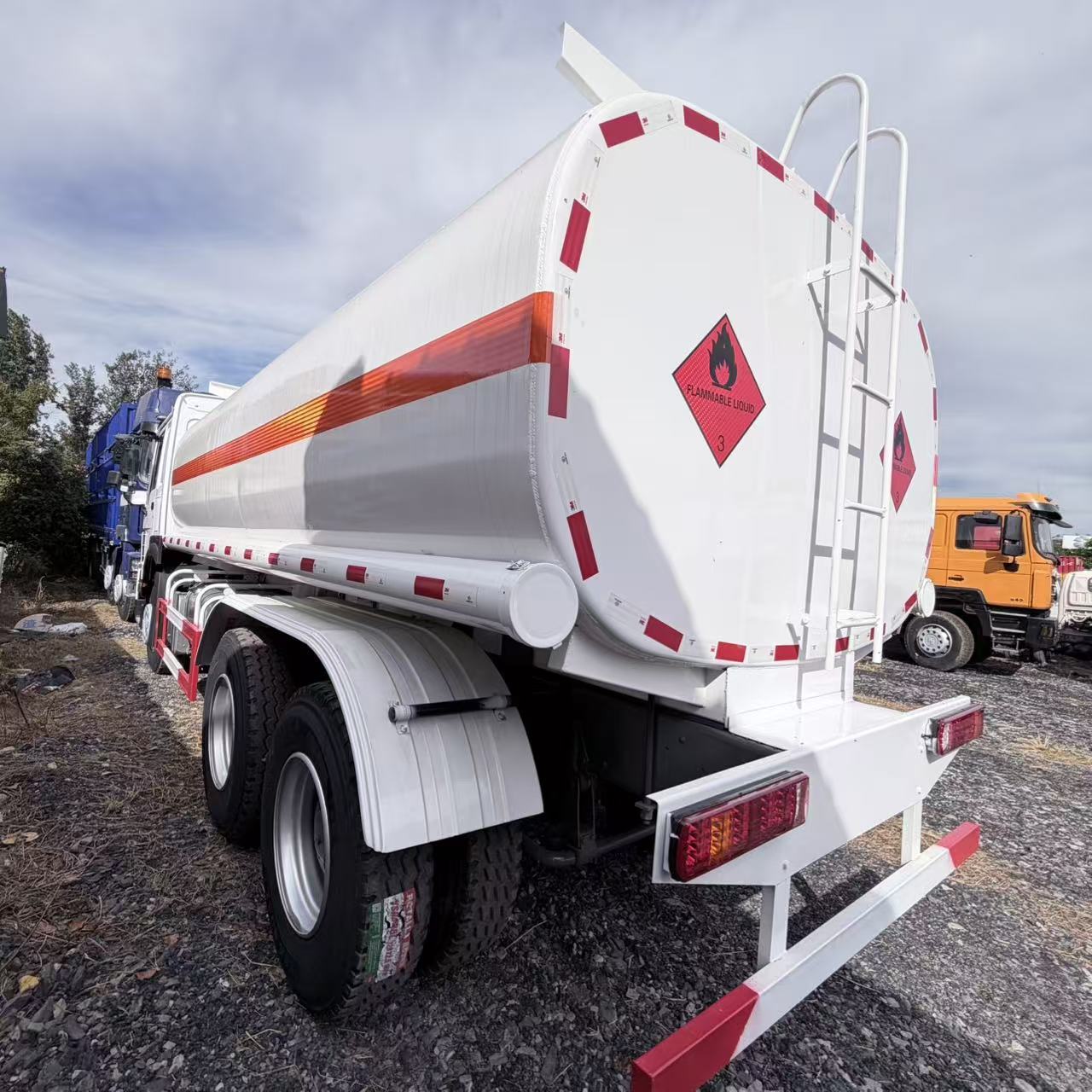
Fuel tanker trucks, also known as oil tankers and petrol tankers, are special vehicles for hazardous liquid transport. Overseas buyers and fuel distribution fleets frequently search fuel tanker safety parts, liquid fuel transport equipment, diesel tanker safety accessories and hazardous liquid tanker fittings when sourcing tankers. Certified safety fittings are critical for inspection and export compliance. Proper safety equipment reduces risks of leakage, static discharge and fire during loading, unloading and long-distance haulage. These components are mandatory under dangerous goods transport regulations across Africa, the Middle East and Southeast Asia.https://www.hjtrailer.com/truck/tank-truck/howo-light-fuel-tanker-truck.html
Static electricity elimination parts are fundamental, including static grounding straps and grounding clamps. Fuel flowing inside the tank generates static charge. Built-up static electricity can ignite fuel vapors. The grounding clamp connects to earth points, and the drag strap continuously releases static from the tank body to prevent spark risks for petrol and diesel tankers.
The emergency shut-off bottom valve, also called emergency foot valve, is fitted at the discharge outlet at the tank bottom. It is the most vital safety fitting. In case of collision or rollover, it cuts off the fuel passage instantly. If the unloading pipe breaks, the valve locks automatically and stops massive fuel spillage, which is the key protection against large-area fuel leakage and fire. Qualified bottom valves are required for nearly all exported fuel tankers.
The breather valve, or pressure vacuum valve, balances internal tank pressure. Temperature change, fuel filling and discharge create positive or negative pressure inside the tank. The breather valve keeps pressure within a safe range to avoid tank rupture or tank collapse, and controls excessive fuel vapor emission.
Overfill alarm sensors trigger sound and light warnings when fuel reaches the maximum filling level. They prevent overfilling and fuel overflow. Spilled fuel is one of the most common hazards at fuel loading terminals, so this sensor system is widely used for depot fuel delivery.
Fire extinguishers are compulsory. Dry powder fire extinguishers are mounted on dedicated brackets beside the tank for putting out early-stage oil fires. The mounting frame is shock-resistant to avoid loosening on rough roads.
A spark arrester / flame arrester is installed on the exhaust pipe. It blocks hot sparks from the exhaust to stop ignition of floating fuel vapor, which is essential at fuel depots, filling stations and loading zones with high vapor concentration.
The manhole cover assembly comes with oil-resistant sealing gaskets and inspection ports. It seals the tank tightly to stop vapor leakage. High-quality gaskets resist oil corrosion and aging for long service life.
Auxiliary safety accessories include anti-collision guards, reflective marking tapes, hazard warning plates and emergency instruction labels. Anti-collision guards protect bottom valves and pipelines from damage by stones; reflective and dangerous-goods signs improve visibility at night and warn other road users.
Please note that hazardous goods rules vary in different countries. Requirements for bottom valve standards, breather specifications and warning sign styles are different. Our fuel tankers support LHD and RHD customization. We configure all safety fittings according to destination country regulations. Every tanker passes tightness test, pressure test and function check for all safety devices before shipment, with full inspection certificates supplied.
If you need compliant diesel or petrol tankers for fuel distribution, tell us your target country. We will equip the tanker with fully matching safety parts and offer FOB price, real photos and delivery schedule.