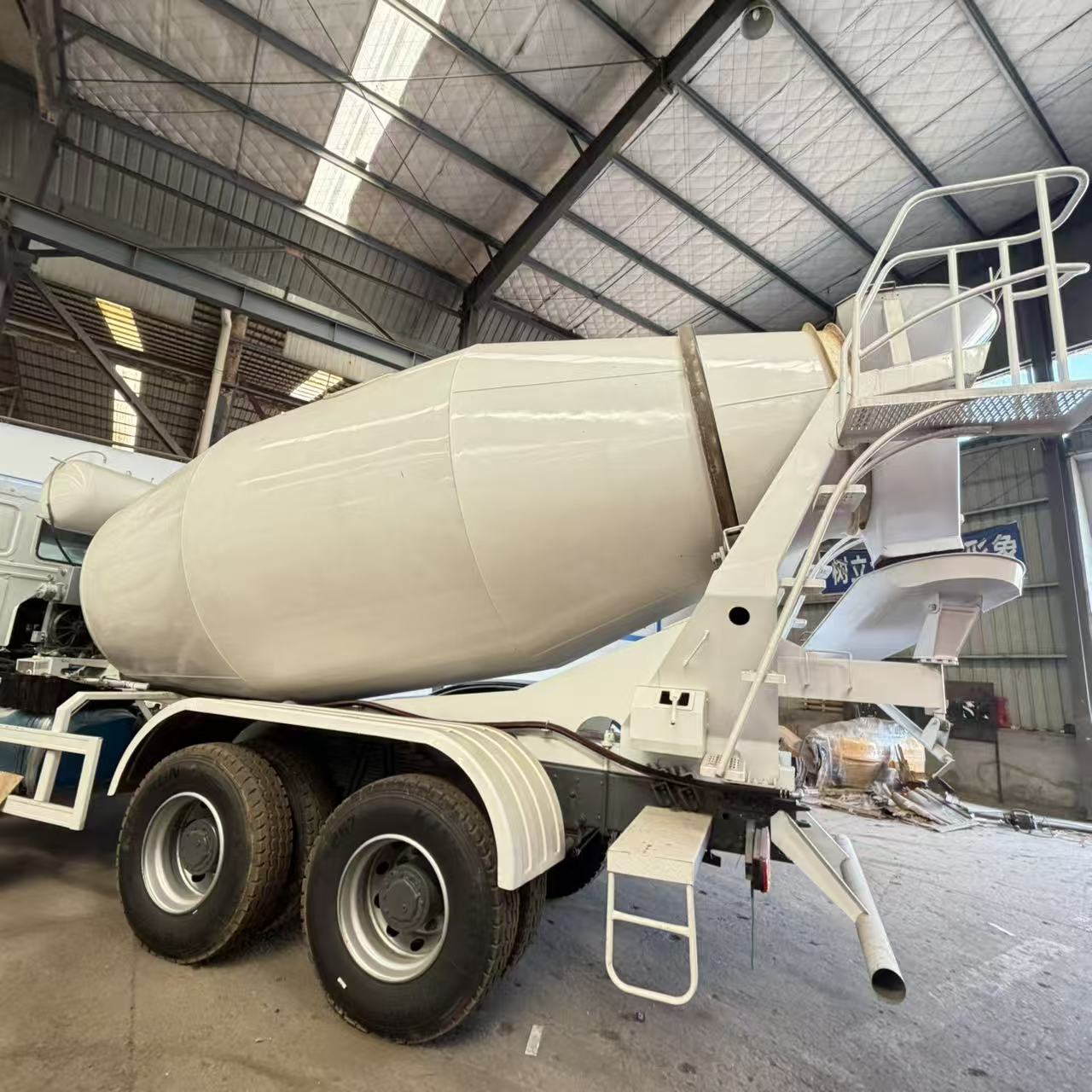
Many overseas construction buyers, batching plant managers and fleet operators feel confused about concrete mixer drum capacity labels when purchasing mixer trucks. It is easy to mix up geometric volume, effective mixing volume and discharge volume, and make wrong decisions. This guide explains how to read concrete mixer drum capacity, clarifies basic definitions, marking rules and common pitfalls, helping buyers select suitable mixer trucks for ready-mix concrete delivery and on-site concrete transfer.
There are three key volume definitions you need to master. The first one is geometric volume, which means the total inner space of the mixing drum. This number is the largest and cannot be used as actual delivery volume. The second is effective mixing volume, the maximum volume that can be mixed steadily without overflow. The third is rated discharge volume, the most commonly quoted cubic meter figure. It is the standard specification for mixer trucks, referring to the volume of concrete that can be discharged smoothly. This is the number used for quotation and construction capacity planning. Some suppliers use geometric volume for promotion, which is not practical for concrete transport. Always focus on rated discharge volume.
The rated capacity is tested under standard concrete conditions. Concrete slump greatly affects loading volume. High-slump wet concrete needs lower loading capacity to avoid spillage during climbing or turning. Low-slump stiff concrete can be loaded with a higher filling ratio. For an 8m³ mixer drum, the actual load will decrease if transporting wet concrete. Mix proportion varies in different countries, so operators should adjust loading amount according to local concrete slump instead of filling the drum to the maximum marked value.
Mixer drum capacity must match chassis capacity and local road regulations. Large-volume drums require heavy-duty 6×4 or 8×4 chassis. Axle load limits decide the maximum drum size you can install. Even if the drum physically holds 10m³, weight limits in some regions may only allow 6-7m³ on the road. Choosing an oversized drum will lead to overloading and failed registration. Never select drum size only by volume; check local weight regulations first.
Internal spiral blades directly affect mixing performance, discharge speed and usable space. Blade pitch and angle decide whether concrete mixes evenly and discharges smoothly. Some drums have a big geometric volume, but thick blades take up much inner space, leading to smaller actual discharge capacity. High-quality mixer drums use wear-resistant alloy blades to balance mixing quality, fast discharge and reasonable effective volume.
Other factors also influence usable drum capacity. Drum tilt angle is designed for transport and mixing, and it changes the filling ratio. If your route has many steep slopes and sharp bends, reduce loading volume to prevent concrete segregation and slurry leakage. For long-distance delivery, besides drum capacity, continuous rotation performance is critical to avoid concrete setting before arriving at the site.
You can match drum capacity with your project scale. Small rural projects and precast factories usually choose 3m³, 4m³ or 5m³ compact drums on 4×2 light mixer trucks for narrow village roads. Municipal road projects and medium batching plants widely adopt 6m³, 8m³ and 10m³ standard mixers. Large infrastructure, dam and high-rise building projects prefer 12m³ and larger drums to cut delivery cycles and lower transport cost.
Concrete mixer trucks support LHD and RHD customization to meet traffic rules in Southeast Asia, Africa, Central Asia and other markets. Every truck is marked with clear rated discharge volume and geometric volume on factory documents. When checking specifications, always prioritize rated discharge volume and avoid misleading geometric volume data. Match drum capacity with local concrete property, road weight limits and site access conditions for your concrete transport business.