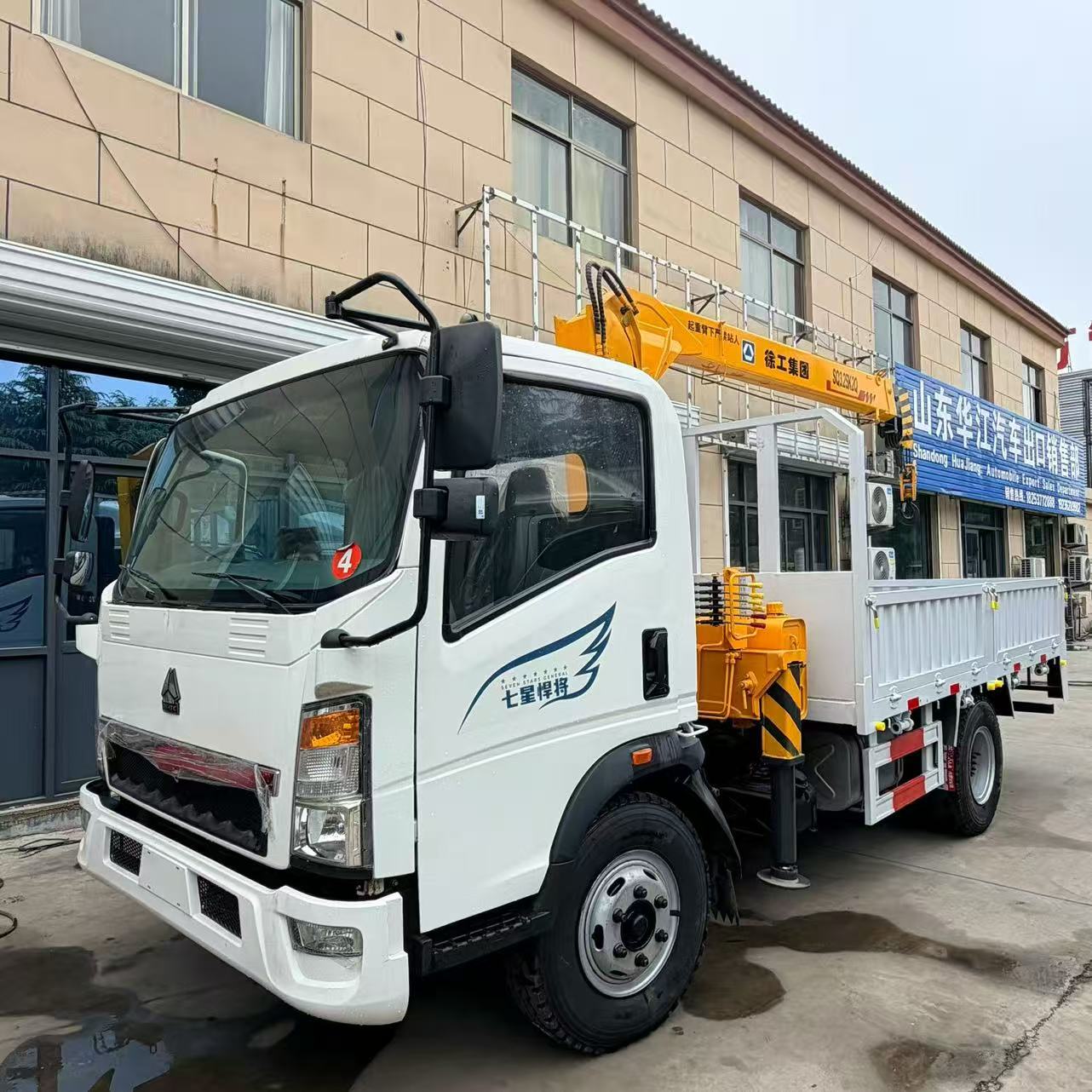
Many overseas construction contractors, building material suppliers and equipment rental companies get confused when choosing between straight boom and knuckle boom crane trucks. Both are truck-mounted lifting machines that combine cargo hauling and hoisting functions, but they differ greatly in structure, working performance and applicable scenarios. Buyers need to consider site conditions, cargo types and available space before making decisions. This guide explains the application difference between straight boom and knuckle boom cranes to help global customers select the right crane truck.https://www.hjtrailer.com/construction-machinery/truck-mounted-crane/knuckle-boom-truck-mounted-crane.html
A straight boom crane, also known as telescopic boom crane, features multi-section telescopic arms. It is easy to operate, offers long outreach and great lifting height. It delivers stable lifting torque with open working view. It is more cost-effective, and spare parts are widely available for simple maintenance. It is widely used on open construction sites, outdoor material yards and rural infrastructure projects, ideal for power pole installation, tree transplanting, steel pipe lifting and precast component hoisting.
Straight boom cranes require enough overhead clearance. They perform well in open areas without overhead obstacles. However, the main disadvantage is large stowed height. They cannot work inside low workshops, tunnels, shipping containers or basements with height limits. The extended boom also has a wide swing radius, which may hit walls or pipelines on crowded job sites.
A knuckle boom crane, also called folding boom crane, is built with hinged arm sections that fold tightly like human arms. Its biggest advantage is compact folded size, so it works well in narrow and low-clearance locations. It is the top choice for indoor equipment installation, container loading and unloading, tight urban lanes, under-bridge works and machinery relocation inside factories. Knuckle boom cranes can lift heavy loads close to the truck body and achieve precise positioning, perfect for delicate equipment, molds and industrial units.
Knuckle boom cranes adopt sophisticated hydraulic systems and flexible joint structures for angle adjustment in tight spaces, where straight boom cranes cannot operate. On the other hand, knuckle boom cranes cost more for the same lifting capacity. They have more hydraulic hoses and hinge parts that require careful regular maintenance. Besides, their maximum horizontal outreach and lifting height are usually lower than straight boom cranes of the same tonnage, so they are less suitable for long-distance outdoor hoisting.
For quick scenario reference: straight boom cranes are preferred for building material delivery, nursery tree transport, power construction and open-site lifting that needs long outreach. Knuckle boom cranes are suitable for indoor machinery moving, container cargo handling, basement hoisting and precision installation in confined spaces.
Customers can match different chassis according to business needs. 4×2 light chassis are commonly fitted with small and medium straight boom cranes for short-distance material delivery. Heavy-duty knuckle boom cranes are usually mounted on 6×4 or 8×4 heavy chassis for large industrial equipment hoisting. Both crane types support LHD and RHD customization to comply with traffic regulations in Africa, Southeast Asia, Central Asia and other markets.
Before purchasing, check three key factors: overhead height limits, available space at work sites, and required lifting radius and height. If your projects include both open and confined working conditions, you can consider having both types for different tasks to maximize fleet utilization.