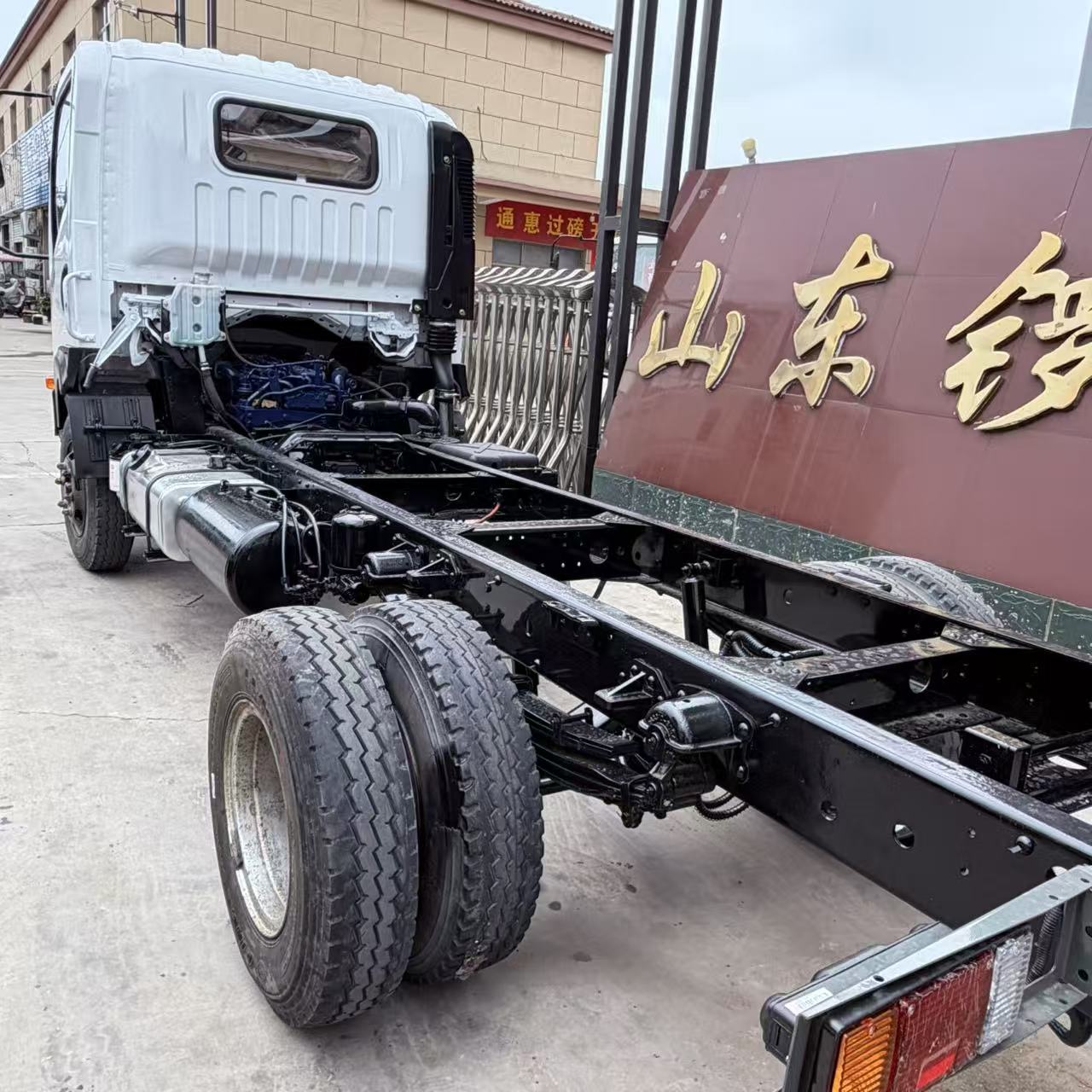
For export trucks sold to overseas markets, chassis anti-corrosion treatment is an indispensable standard processing procedure. The truck chassis bears long-term road vibration, rain erosion, sea salt spray during shipping, and muddy road impact. Without professional anti-rust and anti-corrosion protection, the chassis is prone to rust, peeling, metal aging and structural damage, which seriously affects the service life and safety of heavy duty trucks and reduces vehicle qualification rate for overseas customs clearance. This article introduces standard chassis anti-corrosion treatment methods for export vehicles.https://www.hjtrailer.com/truck/light-truck/cdw-4-2-light-truck-chassis.html
-
Chassis Surface Pre-treatment (Basic Process)
Before anti-corrosion spraying, thorough surface cleaning and polishing is the key to ensure long-term protection. Workers need to completely remove chassis dust, oil stains, welding slag, rust spots and oxide layers. For new commercial trucks for export, high-pressure air washing and sandblasting treatment are adopted to make the chassis metal surface smooth and clean. This step effectively improves the adhesion of anti-corrosion paint and avoids paint falling off and hollowing caused by residual impurities.
-
Primer Anti-rust Coating Treatment
After surface drying, spray high-quality anti-rust primer evenly on the entire chassis, including crossbeams, longitudinal beams, suspension parts and bolt components. The primer forms a dense protective film on the metal surface, isolating air and moisture to prevent electrochemical rusting. For export trucks shipped by sea, thickened primer coating is recommended to resist strong salt spray corrosion during long-distance maritime transportation.
-
Chassis Armor Spraying (Core Anti-corrosion Process)
Chassis armor is the most effective anti-corrosion measure for export engineering trucks and logistics trucks. The special rubber anti-corrosion coating has super wear resistance, waterproof performance and shock absorption effect. Spray evenly on the chassis bottom, girder gaps and easily worn parts. After curing, it forms a flexible protective layer, which can resist gravel impact, rainwater soaking, sea salt erosion and muddy road corrosion. It greatly prolongs the chassis service life and adapts to complex overseas road environments and humid coastal climates.
-
Local Reinforcement Protection for Vulnerable Parts
Some chassis parts are more susceptible to corrosion, requiring targeted reinforcement treatment. Bolt connections, welding seams, chassis corners and suspension bottom parts need secondary fine spraying. In addition, wrap and protect chassis wiring harnesses and pipeline interfaces with anti-corrosion casings to avoid rust damage and aging failure. For fuel tankers, dump trucks and refrigerated trucks for export, local anti-corrosion reinforcement is a necessary customized process.
-
Post-treatment and Drying Detection
After all spraying operations are completed, place the export truck in a constant temperature drying workshop for natural curing or constant temperature drying. It is forbidden to drive the vehicle before the coating is completely cured, so as to avoid dust adhesion and coating damage. Finally, inspect the overall spraying uniformity, no missing spray, no bubble and peeling defects, to ensure the chassis anti-corrosion effect meets international export vehicle standards.
Benefits of Standard Chassis Anti-corrosion
Professional chassis anti-corrosion treatment can effectively solve the problems of sea salt corrosion during shipping and road rust during later use. It stabilizes the chassis structural performance, reduces later maintenance costs, improves vehicle durability, and makes export heavy trucks more adaptable to various complex overseas working conditions, greatly improving product competitiveness and customer satisfaction.