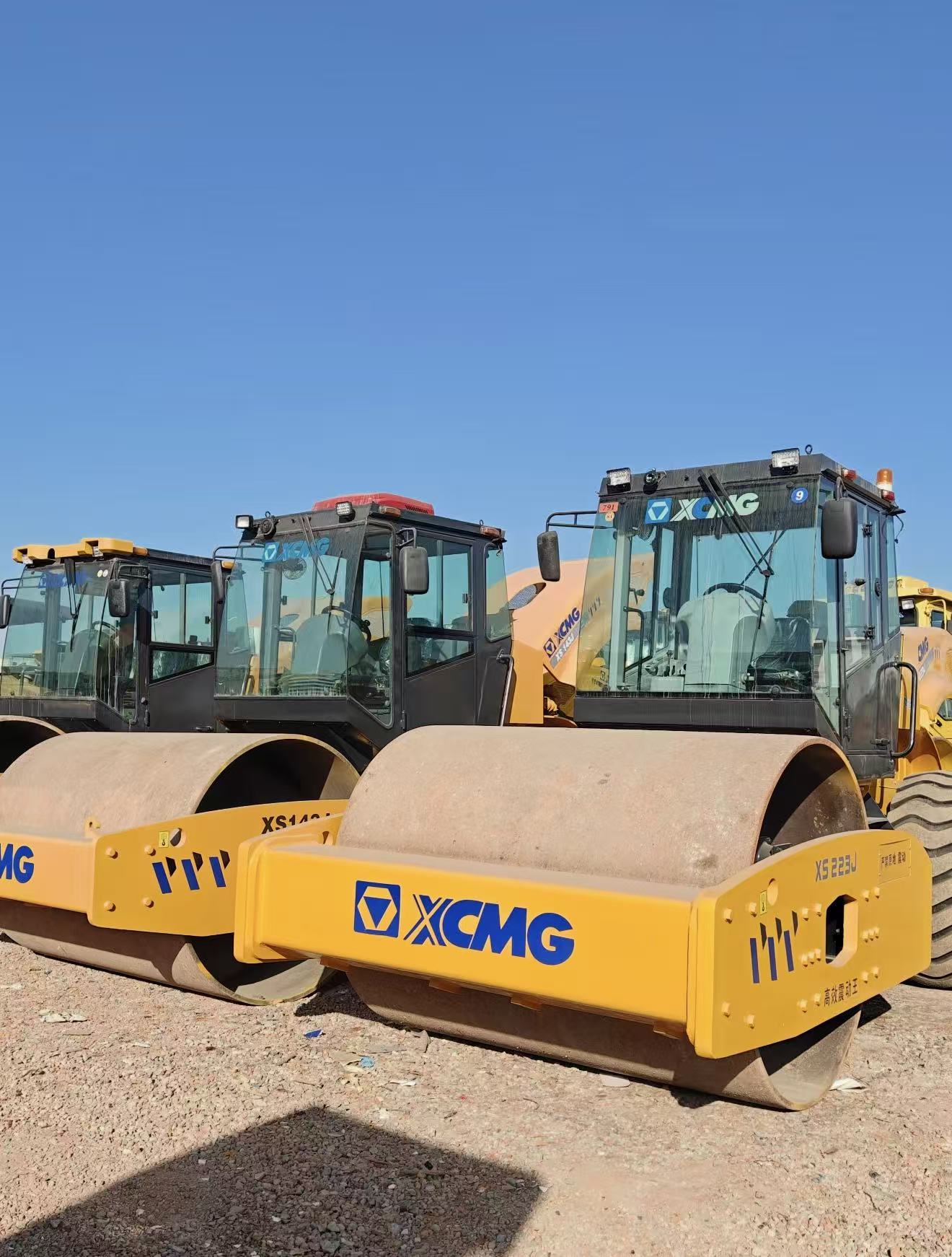
A single drum road roller, also known as soil compaction roller, is widely used for highway construction, yard foundation and mining site compaction in Africa and the Middle East. Vibration failure is one of the most common faults. When the vibration roller cannot vibrate, or the vibration is weak and unstable, construction progress will be delayed. This guide covers common causes, inspection steps and simple fixes for road roller vibration failure, suitable for XCMG, SDLG and other brand compaction machines.
1. Insufficient hydraulic oil or poor oil quality
The vibration system of the vibration road roller relies on hydraulic power. Low hydraulic oil level will lead to insufficient pressure and no vibration. Dirty, degraded or overheated hydraulic oil will cause blockage and abnormal wear of hydraulic components.
- Check: Hydraulic oil level and oil cleanliness
- Solution: Add oil to the standard level; replace hydraulic oil and filter element if oil turns black or contains impurities.
2. Vibration solenoid valve malfunction
The vibration solenoid valve controls the oil circuit to switch vibration mode. Stuck spool, coil burnout or loose wiring will stop the vibration function.
Check: Power supply, wiring connector and solenoid coil
Solution: Clean the valve spool; replace the solenoid coil or whole valve when damaged.
3. Vibration pump pressure is too low
The vibration pump provides pressure for the vibration system. Internal leakage, worn pump parts or improperly adjusted relief pressure will reduce output pressure, resulting in weak vibration or intermittent vibration.
- Check: System pressure with a pressure gauge
- Solution: Adjust relief pressure; repair or replace the vibration pump if serious internal leakage occurs.
4. Vibration motor damage
The vibration motor drives the eccentric block inside the drum. Severe oil leakage, bearing damage or internal gear wear can make the eccentric block unable to rotate normally.
- Check: Oil leakage of vibration motor and abnormal noise
- Solution: Repair the vibration motor or replace it with a new one.
5. Eccentric block stuck or eccentric shaft failure
The eccentric block inside the roller drum generates vibration force. It may be stuck by dirt, iron chips or foreign debris. The eccentric shaft can also bend or break under heavy impact.
- Check: Abnormal sound inside the drum; manual rotation test (safe operation required)
- Solution: Clean debris; repair or replace the eccentric assembly.
6. Control switch and circuit fault
The vibration switch, controller, fuse and wiring harness are easy to fail in dusty, high-temperature construction sites. A broken wire or blown fuse will cut off the vibration signal.
- Check: Vibration switch, fuse and circuit continuity
- Solution: Replace the damaged switch and fuse; fix broken wiring.
7. Vibration bearing overheating and seizure
Lack of lubrication or long-time overload operation causes the vibration bearing to heat up and lock up.
- Check: Drum temperature and abnormal friction noise
- Solution: Add specified lubricating grease; replace seized bearings.
Step-by-step inspection sequence (recommended order)
- Check the dashboard alarm, fuse and control switch
- Inspect hydraulic oil level and oil condition
- Test solenoid valve power and action
- Measure hydraulic system pressure
- Listen for abnormal noise from the drum and vibration motor
- Disassemble to check eccentric block and vibration bearing if needed
Daily maintenance tips to avoid vibration failure
- Replace hydraulic oil and filter on schedule
- Keep hydraulic oil tank clean and prevent dust entering
- Check vibration bearing grease regularly
- Avoid starting vibration on hard solid ground without load
- Do not overload the roller for long time compaction
If you are looking for reliable used road roller or new single drum compaction roller for Africa and Middle East construction projects, contact us for specifications and price.