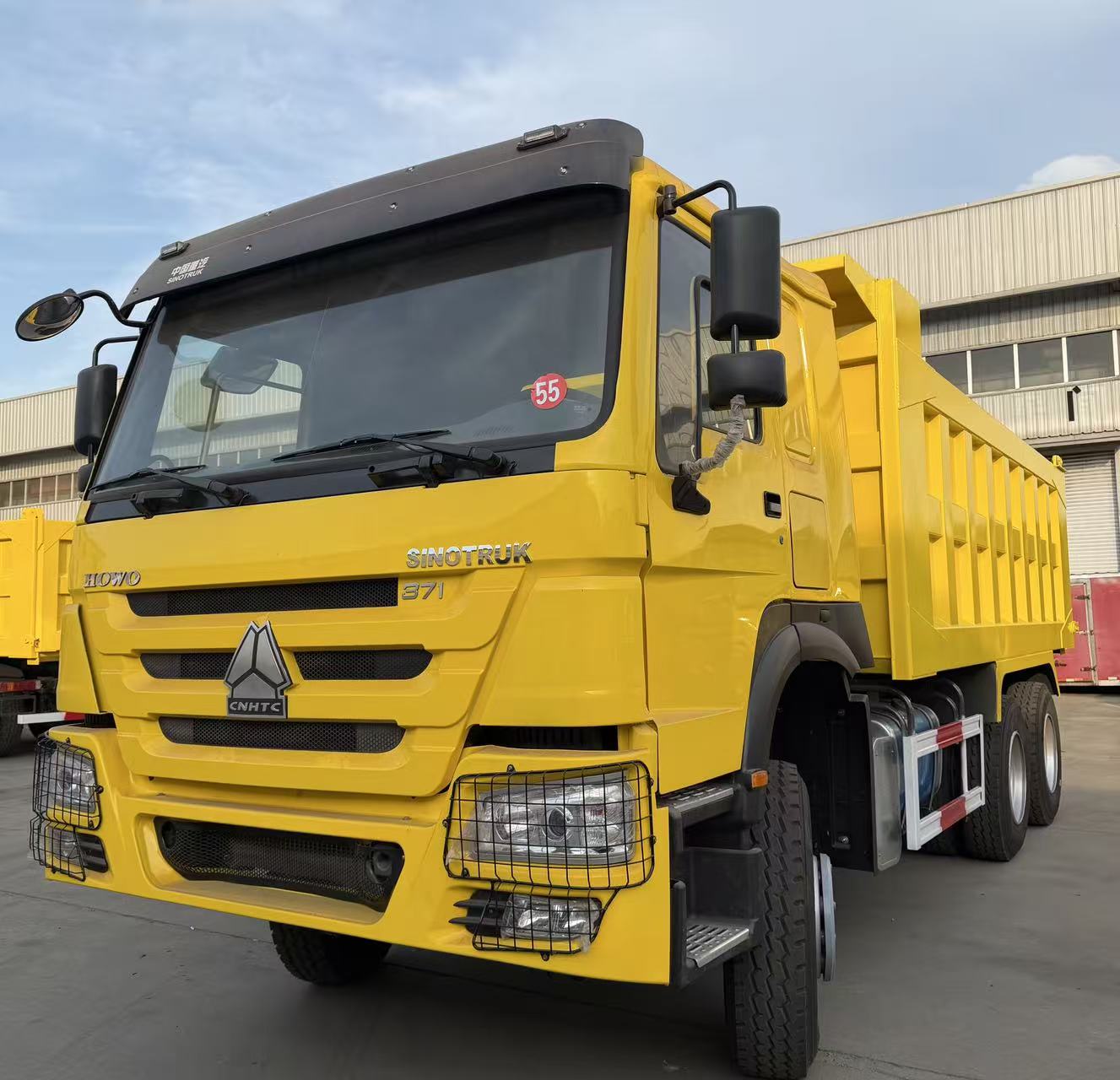
The SINOTRUK HOWO dump truck is one of the most widely used heavy tipper trucks for mines, quarries and stone pits. Mine sites feature muddy roads, steep slopes, uneven ground, heavy loads and harsh dust. Improper operation will easily cause tire damage, hydraulic cylinder failure, frame deformation, rollover and other serious accidents. Below are practical operation tips for HOWO dump truck working in mining conditions.https://www.hjtrailer.com/truck/dump-truck/yellow-engineering-dump-truck.html
Check the whole vehicle before entering the mine. Inspect tire pressure and tire surface for cuts, bulges and embedded stones. Verify the hydraulic oil level, oil pipe joints, lifting cylinder and locking mechanism. Check brake system, cooling water level and air filter. Dust in mines enters the engine easily, so a blocked air filter will lead to power drop and engine wear. For RHD HOWO dump truck, confirm the rear-view mirrors and warning lights work normally before starting.
Control loading weight strictly and avoid overloading. Many mine operators overload the tipper truck to improve efficiency. Overloading puts huge pressure on the frame, rear axle, suspension and hydraulic lifting system. It will cause permanent bending of the chassis, oil leakage of the lifting cylinder and brake failure. Follow the rated load capacity marked on the HOWO dump truck. Do not pile materials higher than the side boards, prevent stones rolling down during driving.
Load materials evenly inside the cargo box. Concentrated heavy load on one side is a major reason for rollover on rough mining roads. Ask loaders to distribute sand, ore and stones evenly. Avoid heavy ore stacking only on the front or rear of the dump box.
Drive slowly and keep steady on mine roads. Mine roads are narrow, slippery and full of pits. Do not speed, make sharp turns or emergency braking. Slow down before curves and slopes. When going uphill, keep stable engine speed and avoid frequent gear shifting. When going downhill, use engine braking reasonably, do not keep stepping on the brake pedal continuously, which will cause brake overheating and braking failure.
Master the correct tipping and unloading steps. Park the dump truck on flat, solid ground before lifting the box. Never unload on sloped, soft or hollow ground. Pull the handbrake firmly, warn surrounding workers and vehicles. Engage the PTO, operate the lifting handle smoothly. After the cargo is fully unloaded, lower the box completely and lock the hydraulic mechanism before driving away. Do not drive with the box raised.
Pay attention to obstacles and overhead clearance. Mines have rock overhangs, power cables and tunnel entrances. When the dump box is lifted, the overall height increases greatly. Always check overhead space before tipping, to prevent collision between the box and rocks or cables.
Clean and maintain the vehicle after daily mining work. Ore dust and mud stick to the chassis, hydraulic cylinder and radiator. Wash the mud away in time. Check the hydraulic cylinder for scratches and stone impacts. Replace air filter regularly according to dust level. Grease the lifting hinge points and subframe connection parts to reduce wear.
Deal with bad weather properly. When it rains, mine roads become extremely slippery. Reduce speed and increase safety distance. If the road surface collapses or gets stuck, do not force the vehicle to move; call for rescue to avoid axle damage or frame fracture.
If you plan to purchase reliable HOWO mining dump trucks, we supply 6x4 and 8x4 heavy tipper trucks, support RHD conversion, different tank volumes and emission standards for quarry and mining projects.
If you have questions about mining operation or maintenance of heavy dump trucks, welcome to contact us for technical guidance.