

If you’ve ever needed to ship a car—whether it’s a daily driver to a new city, a vintage ride to a collector, or even a fleet of work vehicles across the country—you’ve probably wondered: “What’s the average cost per mile for car carrier services?” As a car carrier provider who’s been in this game for over a decade, I get it. It’s not a one-size-fits-all number, and there are a ton of variables that swing the price. Let me break this down like I would to a new customer who just shot me a text at 2 a.m. panicking about their shipment.
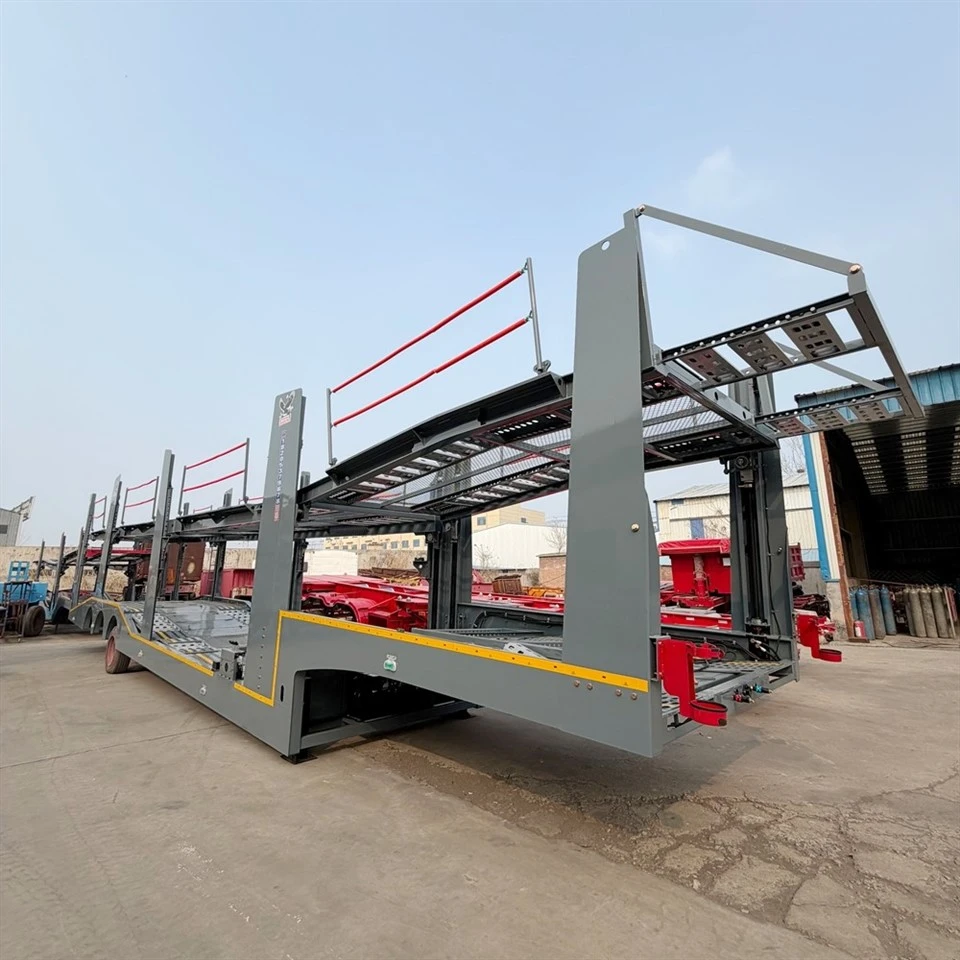
First, let’s start with the basics. Most people don’t realize that car carriers aren’t just big trucks hauling one car—they’re rigs built to stack multiple vehicles, which is how we keep costs (somewhat) low. The two main types of carriers we use are double-deck car carriers and trailer-type car carriers, both of which you can check out to see how we structure our loads. That’s key because how we pack a shipment directly impacts the per-mile cost. A double-deck rig, for example, can hold up to 10 cars (depending on size), so each vehicle’s portion of the fuel, insurance, and driver costs drops. A single-car trailer, on the other hand, is way more expensive per mile because it’s only moving one vehicle.
Now, let’s talk averages. I’ve crunched the numbers for all our shipments over the last year, and here’s what I’m seeing: for standard open-carrier loads (the most common type, where cars are exposed), the average cost per mile works out to around $1.80 to $2.50 per vehicle. Wait, per vehicle, not per mile total—if a rig is 1,000 miles and has 8 cars, the total cost for the trip is around $1,800 to $2,500, so each car pays roughly that per mile. Enclosed carriers (for fancy, vintage, or luxury cars) are way higher—usually $3 to $4.50 per vehicle per mile. Why? Because enclosed carriers are smaller, hold fewer cars, and have extra protection (weather-proofing, secure locks), which adds to the overhead.
But don’t take that number as gospel. Let’s get into the factors that make it jump up or down. Distance is a big one. Short hauls (under 100 miles) are way more expensive per mile—sometimes $3 to $4 for open carriers, $5 to $6 for enclosed. Why? Because drivers have to make a trip out and back, and fuel costs don’t drop much for short runs. A 50-mile local haul might cost $200 to $300 per car, which is $4 to $6 per mile, way higher than a cross-country run. For long hauls (1,000+ miles), the average per mile actually drops—we’re talking $1.50 to $2 per open car, because we’re spreading the fixed costs (driver pay, truck maintenance, permits) over more miles.
Then there’s the type of vehicle. A compact sedan is way cheaper to ship than a full-size pickup truck or an SUV. Wait, why? Because double-deck car carriers have weight limits and space constraints. Pickups and SUVs take up more space on the lower deck, so we can’t fit as many of them. That means the per-vehicle cost goes up. Vans, for example, might cost 10-15% more than a sedan. And if you’re shipping an oversized vehicle (like a motorhome), we might need a specialized trailer, which bumps the per-mile cost to $4 or more.
Time of year matters too. Spring and summer are peak shipping times—everyone’s moving, kids are going to college, people are buying cars online from across the country. During these months, demand is high, so per-mile costs can jump 10-20%. I’ve seen some customers get quoted $2.75 per mile in June when last January it was $2 flat. Winter is slower, so we run more deals—sometimes you can get a cross-country open carrier run for $1.75 per mile if you book a few weeks in advance.
Another thing: door-to-door vs. terminal-to-terminal. Terminal-to-terminal is cheaper—you drop your car at a local terminal, and we pick it up at another terminal. That cuts down on driver time, so we can pass the savings to you. Door-to-door is way more convenient, but also more expensive. The driver has to go out of their way to your house, maybe deal with narrow streets or a difficult driveway, which adds time to the trip. I’d guess door-to-door is about 15% more than terminal-to-terminal, so if terminal is $2 per mile, door is $2.30.
Wait, let’s get specific with an example. Say you’re shipping a 2023 Honda Civic from Chicago to Los Angeles—about 2,000 miles. That’s a long-haul run, so average per mile is $1.80. Open carrier, door-to-door. So total cost would be 2,000 miles x $1.80 = $3,600, plus maybe a little extra for door service, so around $4,100. If you were shipping a Ford F-150 instead, which is a full-size pickup, maybe we can only fit 7 of those on the double-deck instead of 9 sedans, so per mile goes up to $2.10, total around $4,200. If it was a vintage Mustang needing enclosed transport, that would be $3.50 per mile, so $7,000 total.
Now, some people will ask, “Why can’t you just quote me a flat rate?” The truth is, there are so many moving parts (pun intended) that a flat rate is impossible. Fuel prices, for one—diesel is a huge expense for car carriers. If diesel jumps 20 cents a gallon, that can add $500 to a 2,000-mile trip, which gets split between all the vehicles on the rig. Driver pay too—we pay our drivers per mile, so if a trip takes an extra day because of traffic or weather, that’s more cost we have to pass along. Also, insurance: each car has to have cargo insurance, and if you’re shipping a high-value car, that insurance premium goes up, which affects the per-mile cost.

I’ve had customers tell me they got a quote from another company for $1 per mile, but that’s usually a red flag. If it sounds too good to be true, it probably is. That company might be cutting corners—using unlicensed drivers, outdated trucks, or skimping on insurance. I’d rather charge a fair $2 per mile than have a customer’s car get damaged because we’re saving money on maintenance. As a provider, transparency is everything—we’ll break down the costs for you: fuel, driver pay, insurance, overhead, and how many cars are on the rig.
Another thing to consider is trailer-type car carriers, which are a bit different. These are usually single-deck trailers that can hold 4-5 cars, so they’re often used for smaller loads or specialized vehicles. Their per-mile cost is a bit higher than double-deck because they hold fewer cars. If you’re shipping just two cars, a trailer-type carrier might work out to $2.25 per mile per car, whereas a double-deck would be $1.90. So if you have fewer than 5 cars, trailer-type might be more economical, but if you have more, double-deck is better.
Wait, let’s talk about hidden costs. Some companies will quote you a low per mile, then add fees for “extra stops,” “gate access,” or “delivery delays.” We try to avoid that—our quotes are all-inclusive, no hidden fees. For example, if you live in a rural area and the driver has to go off the main highway, we might add a small fee, but we’ll tell you that upfront, not surprise you on delivery day. That’s why it’s important to work with a reputable provider—someone who’s been around, has good reviews, and is transparent about their pricing.
I remember a customer last year who was shipping a classic Corvette from Miami to Seattle. He got a quote from a guy online for $1.50 per mile, which seemed great, but when the driver showed up, he tried to charge him an extra $800 for “custom handling” and “insurance surcharge.” The customer came to me, and I was able to get him an enclosed carrier for $3.75 per mile, which was a bit higher than the original lowball quote, but no hidden fees, and we had a track record of shipping vintage cars without damage. In the end, he was way happier, even if it was a little more upfront—because he didn’t have to worry about being scammed.
So, to sum up: the average cost per mile for car carrier services is between $1.50 and $2.50 for open carriers, $3 and $4.50 for enclosed, per vehicle. But that’s just an average. Your actual cost depends on distance (short vs. long), vehicle type, time of year, transport type (open/enclosed), and whether it’s door-to-door or terminal-to-terminal.
If you’re ready to ship a car, don’t just go for the cheapest quote. Look for a provider that can explain the pricing, uses modern equipment (check out our double-deck car carrier and trailer-type car carrier to see what we use), and has experience with your type of vehicle. We’re here to answer all your questions, break down the costs, and make sure your car gets where it’s safe and on time. Whether you’re shipping one car or a fleet, we can tailor a service that fits your budget.
Don’t hesitate to reach out if you want a personalized quote—no awkward sales pitches, just straight talk about what you’ll pay and why.
References:
- American Trucking Associations. (2023). “2023 Trucking Cost Index: Fuel, Labor, and Equipment Trends.”
- Car Carrier Association of North America. (2022). “Industry Pricing Report for Vehicle Transport Services.”
- U.S. Department of Transportation. (2023). “Regulations for Commercial Vehicle Transport and Insurance Requirements.”