

If you’re in the heavy haulage or construction industry, you know that a low-bed semi-trailer isn’t just a piece of equipment—it’s a workhorse that moves oversize, heavy cargo you can’t haul on a standard flatbed. But here’s the thing I hear every day from owner-operators and fleet managers who come to me as a low-bed semi-trailer supplier: they focus so much on the upfront purchase cost that they forget maintenance, and that’s where hidden costs start piling up. Over the 15 years I’ve been in this business, I’ve seen too many operators cut corners on upkeep only to deal with breakdowns that cost them thousands in downtime and repairs. Today, I’m breaking down exactly what goes into maintaining these specialized trailers, by the numbers, so you can budget wisely and keep your operations running smoothly.
First, let’s get one thing straight: not all low-beds are the same, and maintenance costs vary a lot based on which type you own. For example, a Telescopic Low Bed Trailers is designed for adjustable length to fit different cargo sizes, which means it has extra moving parts that need regular checks compared to a fixed-length unit. A Heavy-duty Lowbed Trailers, built to handle 100+ ton loads, has reinforced frames, heavy-duty axles, and specialized suspension that demand more frequent servicing than a lighter 3-axle Low Flatbed Trailers. Even niche models like the Goethe-Köhler Lowbed Trailers, with their unique hydraulic systems, have specific maintenance needs you can’t ignore. Multi-axle Lowbed Trailers, common for extremely heavy cargo, have more axles, brakes, and tires—so their maintenance adds up across more components. It’s a mistake to use a one-size-fits-all maintenance plan, and I’ll explain why each type impacts costs as we go.
Let’s start with the big-ticket, regular maintenance that every low-bed semi-trailer needs, regardless of model. First, brakes. Low-beds haul heavy loads, so their braking systems work harder than standard trailers. I recommend a full brake inspection every 1,000 miles or 50 hours of operation—whichever comes first. Most operators don’t realize that brake pads, rotors, and brake shoes on a heavy low-bed wear out 20-30% faster than on a dry van or flatbed. The average cost per brake axle for a low-bed is $150-$250 for parts, plus $100-$150 for labor, so if you have a 5-axle trailer, that’s $1,250-$2,000 per brake service. If you skip inspections and let brakes wear down too far, you’re looking at $500-$800 per axle for emergency repairs, and even worse, a downtime incident that can cost you a full day’s work. For hydraulic low-beds (like telescopic models), the brake lines and calipers are more complex, so that service cost jumps an extra 10-15% because of specialized parts and tools.
Next, suspension. This is another make-or-break component for low-beds, as it carries most of the load weight. There are two main types: leaf spring and air ride. Leaf spring suspensions are cheaper to maintain, with annual service costing $300-$500 per axle (mostly lubricating bushings and checking for cracks). Air ride suspensions, common on heavy-duty models for smoother load handling, are more expensive—annual service is $500-$800 per axle, because they require checking air lines, replacing air bags, and adjusting height sensors. The biggest hidden cost here: if a suspension part fails while you’re hauling cargo, you could damage the trailer frame or even the cargo. Last year, a client of mine with a multi-axle low-bed ignored a cracked leaf spring, and when they hit a pothole, the frame twisted, resulting in $4,500 in frame repairs plus $2,000 in cargo damage. That’s why I always emphasize not skipping suspension checks—they’re a small cost compared to the alternative.
Tires are the next major expense, and this is where operator habits make a huge difference. Low-beds run on larger, heavier-duty tires than standard trailers, designed to carry more weight. A single heavy low-bed tire costs $300-$500, compared to $150-$250 for a standard dry van tire. The average tire life for a low-bed is 30,000-50,000 miles, versus 60,000-80,000 miles for standard trailers. Why? Because low-beds are often used on rough, off-road job sites, not just paved highways. Proper inflation is key here—underinflated tires wear out 2x faster, so monthly inflation checks (and adjusting for load weight) are non-negotiable. If you have a 5-axle trailer with 10 tires (dual wheels), replacing all tires when they wear out can cost $3,000-$5,000, and if you have a multi-axle model with more axles, that number goes up even more. I always advise operators to keep a spare tire on hand, because changing a low-bed tire on a remote job site can add $200-$400 per tire in road service fees, not to mention the downtime.
Now, let’s talk about model-specific maintenance, because this is where costs start to diverge. Telescopic low beds have hydraulic cylinders and sliding sections that need regular lubrication and seal checks. These seals prevent hydraulic fluid leaks, which can not only damage the trailer’s moving parts but also pose safety risks. I recommend lubricating telescopic sections every 200 operating hours and inspecting hydraulic seals every 6 months. The cost here: high-quality hydraulic lubricant is $80-$120 per container, and seal replacement is $200-$300 per cylinder (with most telescopic models having 2-4 cylinders). If you skip this, a hydraulic leak can cost $1,000+ to repair, and you’ll be sidelined until the part arrives. For heavy-duty low beds, their reinforced frames and crossmembers are built to handle extreme loads, but that means regular frame inspections are critical. Every year, you should have a certified inspector check for cracks in the frame and welds—this costs $200-$300, but skipping it can lead to frame failure, which is a $10,000+ repair that usually means writing off the trailer’s frame entirely.
3-axle low flatbeds are more common for general oversize loads, so their maintenance is slightly lower than heavier models, but still specific. They have simpler braking and suspension systems, so annual maintenance costs average $1,500-$2,500, compared to $2,500-$4,000 for a 5-axle heavy-duty model. Goethe-Köhler low beds, designed with unique loading ramps and quick-adjust features, have their own quirks: the ramp hinges and locking mechanisms need weekly lubrication, and the ramp latches require monthly inspections to ensure they’re secure. I’ve seen operators overlook these small parts, leading to ramp issues mid-load that require emergency repairs at a job site, costing hundreds in service fees and lost productivity. Multi-axle low beds, as I mentioned earlier, have more axles, so their maintenance is spread across more components. A 8-axle multi-axle low bed can have 16 tires, 8 axles, and 16 brake sets, so annual maintenance costs are often $4,000-$6,000—double that of a 3-axle model. The upside is that multi-axle trailers distribute weight better, so they last longer if maintained, with a typical lifespan of 15-20 years, compared to 10-15 years for a standard low bed.
There are also variable costs that most operators don’t account for in their budget. First, road-side service and emergency repairs. If you break down on a highway or at a remote job site, the cost of a mobile repair technician is $150-$250 per hour, plus parts markup. Last year, a client of mine with a multi-axle low bed got a flat tire on a rural highway, and the road service charged him $450 to come out, plus $400 for the tire and $300 in labor—totaling $1,150, which was way more than if he had changed it himself with a spare. Second, downtime. Every day your trailer is out of service, you’re not making money. The average revenue for a low-bed semi-trailer is $1.50-$2.50 per mile, so if downtime costs you 500 miles of work, that’s $750-$1,250 in lost revenue for every day your trailer is in the shop. That’s why preventive maintenance is so important—spending $500 on a brake inspection is way better than spending $5,000 on a brake failure that sidelines you for 3 days. Third, storage and cleaning. Low-beds used on construction sites get covered in dirt, mud, and debris, which can corrode metal parts over time. I recommend pressure washing your trailer every 100 operating hours, especially if you work on sites with salt or chemicals (like winter road jobs). Pressure washing costs $100-$200 per session, but skipping it can lead to rusted axles and frames, which cost thousands to repair down the line.
Now, let’s put this all together into a realistic annual maintenance budget, based on the model you own. For a 3-axle low flatbed trailer, the total annual maintenance (excluding major repairs) is roughly $1,800-$2,800, which breaks down to $150-$230 per month. For a telescopic low bed, add $800-$1,200 per year for hydraulic service, bringing the total to $2,600-$4,000 annually. A heavy-duty 5-axle low bed has annual maintenance costs of $3,000-$5,000, and a multi-axle 8-axle low bed ranges from $4,500-$7,000 per year. Keep in mind that these are average costs—if you work on rough job sites or haul extremely heavy loads, add 20-30% to that number. Also, major repairs (like frame cracks, suspension replacement, or hydraulic cylinder overhauls) can add $2,000-$10,000 or more to your annual costs, depending on how well you maintain your trailer.
One thing I always tell new operators: the best way to lower maintenance costs is to follow a strict preventive maintenance schedule, not a reactive one. I keep a log for every trailer I sell, with reminders for inspections, lubrication, and service intervals, and I work with local technicians who specialize in low-beds (not standard trailers, because they don’t know the specialized parts). For example, when you lubricate your trailer, use the right type of grease—heavy-load, extreme-pressure grease, not regular automotive grease. Using the wrong grease can ruin bushings and bearings, leading to early failure. For hydraulic systems, use only manufacturer-recommended fluid, not generic fluid, which can cause seal damage and leaks.
I also advise operators to budget 5-7% of their trailer’s purchase price annually for maintenance and repairs. If you buy a new heavy-duty low bed for $80,000, that’s $4,000-$5,600 per year for maintenance, which aligns with the numbers I mentioned earlier. Used trailers have lower upfront costs, but their maintenance costs are often 10-15% higher because parts are worn, so factor that in when considering a used unit.
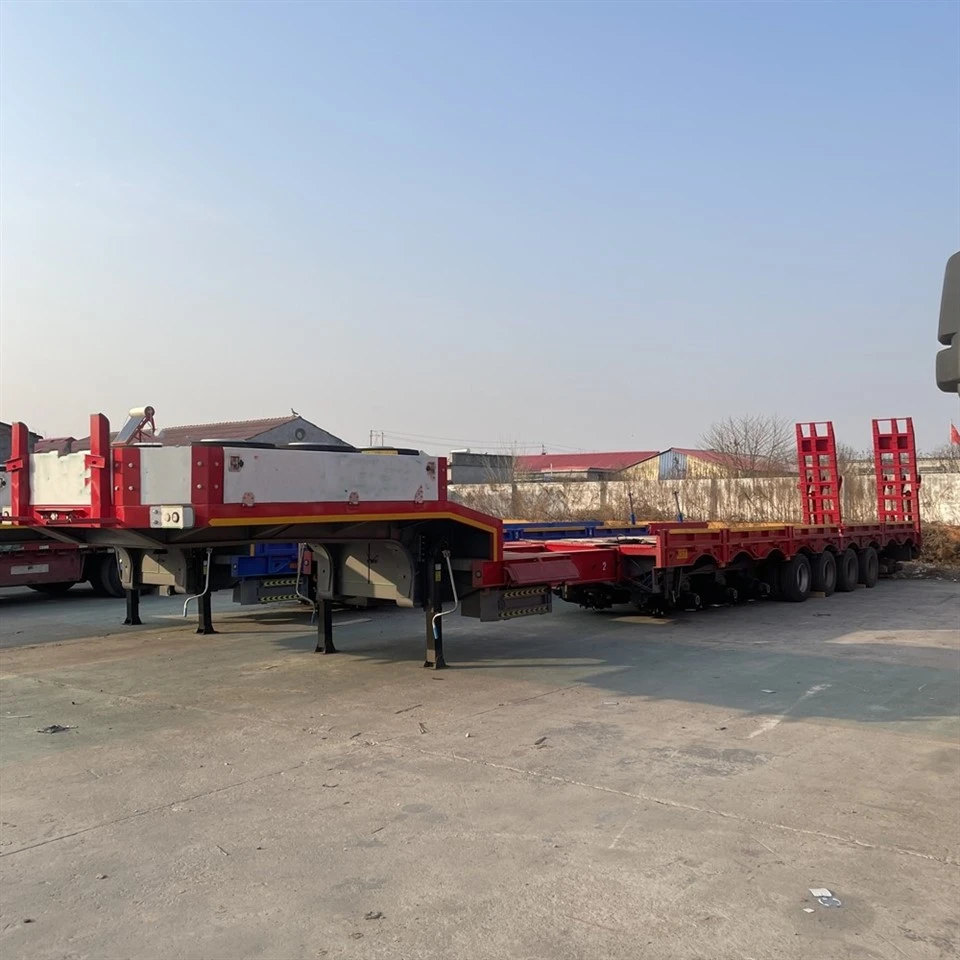
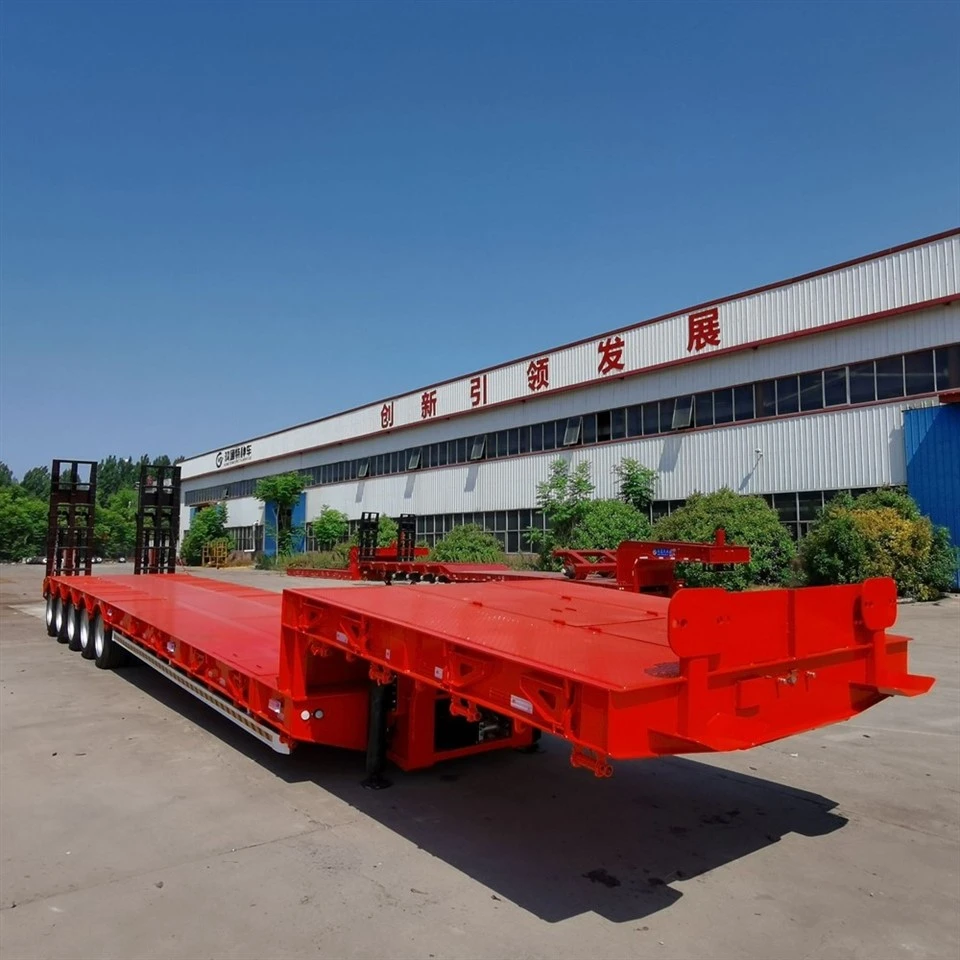
At the end of the day, a low-bed semi-trailer is a big investment, and its maintenance isn’t something you can afford to overlook. Cutting corners on service might save you a few bucks in the short term, but it will lead to costly repairs, downtime, and even safety hazards on the road. If you’re in the market for a new low-bed trailer, our team can help you pick the right model for your needs—whether you need a Telescopic Low Bed Trailers for adjustable cargo, a Heavy-duty Lowbed Trailers for ultra-heavy loads, a 3-axle Low Flatbed Trailers for general oversize hauling, a Goethe-Köhler Lowbed Trailers for specialized loading, or a Multi-axle Lowbed Trailers for extra weight capacity. We also offer maintenance guides and partner with trusted technicians to help you keep your trailer in top shape.
If you’re ready to learn more about the right low-bed trailer for your operations, or want to discuss maintenance plans that fit your budget, we’re here to help.
References:
- Truck Trailer Manufacturers Association. (2022). Maintenance Guidelines for Heavy-Duty Semi-Trailers.
- National Association of Heavy Haulers. (2023). Cost Analysis of Low-Bed Trailer Maintenance.
- Trailer Body Builders Association. (2021). Specialized Trailer Maintenance Best Practices.
- U.S. Department of Transportation, Federal Motor Carrier Safety Administration. (2022). Brake and Suspension Maintenance Requirements for Commercial Trailers.