

If you’re in the business of moving goods, machinery, or materials across town, across the country, or even across continents, you’ve probably wondered: what’s the best way to maximize cargo capacity without breaking the bank or sacrificing safety? That’s where semi-trailers come in, and as someone who’s spent years supplying these workhorses to businesses big and small, I can tell you they’re way more than just a trailer hitched to a truck. Let’s break down the real advantages of using a semi-trailer, not the corporate fluff you might see on a generic supply site, but the stuff we hear every day from our own clients.
First off, capacity. Unlike straight trucks—where the entire vehicle is cab and trailer, so you’re limited by the wheelbase and total length—semi-trailers detach from the cab, which means you can customize the trailer to fit exactly what you’re moving. For example, if you’re transporting bulk materials like cement, a cement tanker trailer is built to hold thousands of gallons of powder without wasting space, and since it’s a semi, you don’t have to cram it into a straight truck’s smaller frame. Even for palletized goods, a 13-meter flatbed semi-trailer has 13 meters of floor space, way more than a typical straight box truck, so you can move 2 or 3 times the cargo in a single trip. That cuts down on number of runs, fuel costs, and labor time—all huge wins for any operation trying to keep budgets tight.
Speaking of customization, that’s a game-changer most people overlook. Not every load is the same, and semi-trailers can be tailored to your exact needs, which you can see in our different offerings. Need to haul liquid cargo, like fuel or chemicals? An oil tank trailer is engineered with leak-proof compartments and reinforced frames to handle those heavy, often hazardous materials safely. For oversized cargo—think construction equipment, heavy machinery, or prefabricated building parts—we’ve got telescopic low bed trailers that extend to fit extra-long loads, or hydraulic gooseneck lowbed trailers that lower to the ground to make loading tall machinery easier without needing extra ramps or specialized equipment. Straight trucks can’t do that; their fixed cab and chassis mean you’re stuck with a one-size-fits-most setup, which often leads to wasted space or, worse, being unable to move your load at all.
Then there’s the cost savings, which is why semi-trailers are the go-to for long-haul and regular operations. Let’s do a quick real-world math check: if you’re moving 10,000 pounds of cargo, a straight truck might make two trips to cover that, using twice the fuel, driver time, and wear and tear on your vehicle. A semi-trailer? It makes one trip, because you can attach a longer, heavier trailer. Also, since you can swap trailers, you don’t need multiple trucks for different loads. One cab, a cement tanker for material runs, a flatbed for palletized goods, a lowbed for heavy equipment—just swap the trailers, and you’re good to go. That cuts down on your fleet size, which means less upfront cost, less maintenance, and fewer drivers to pay. A lot of our clients started with one semi cab and two trailers, and now they’re running three trailers with the same cab—no extra expenses, just more capacity.
Safety is another big one, especially for high-value or hazardous cargo. Modern semi-trailers are built with features that straight trucks just don’t have. Take tanker trailers: they have baffles inside the tank to keep liquid from sloshing around, which prevents the trailer from tipping or losing control during turns. Lowbed trailers have reinforced frames and secure tie-down points designed to keep heavy loads stable at highway speeds, so you don’t have to worry about your equipment shifting and causing an accident. Also, since semi-trailers are attached to the cab with a fifth wheel, the coupling is way more secure than the hitch on a straight truck—way less chance of the trailer coming loose while you’re driving. We’ve had clients who switched from straight trucks to semi-trailers tell us they’ve seen a 30% drop in minor accidents related to cargo shifting, which is a huge relief for any fleet manager.
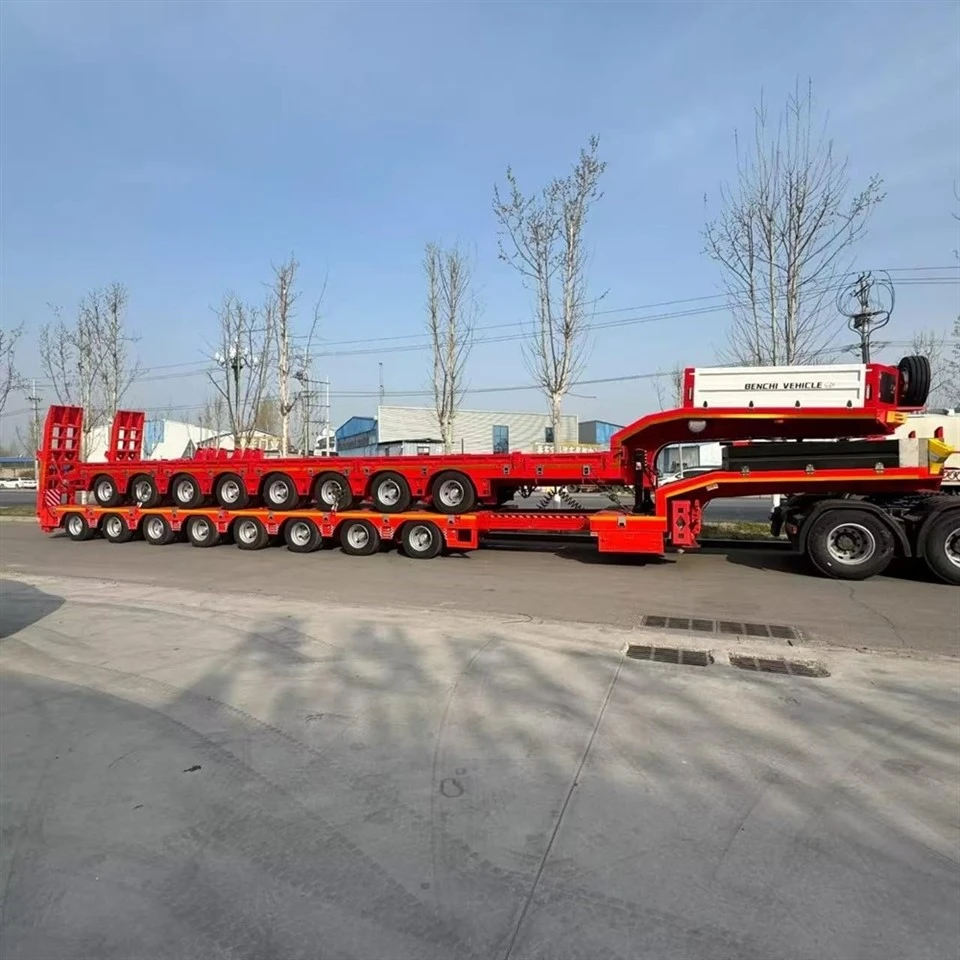

Versatility isn’t just about the type of trailer, either. Semi-trailers work for both short-haul and long-haul trips. If you’re moving cargo between a warehouse and a local distribution center, a flatbed semi is easy to load with a forklift, no special equipment needed. If you’re moving that same cargo cross-country, the same semi can handle highway speeds efficiently, and since you can leave the trailer at the destination while the cab goes to pick up another load, you minimize downtime. Straight trucks can’t do that—you’ve got to bring the whole vehicle back, which wastes time. That flexibility is why so many logistics companies, construction firms, and even agricultural businesses rely on semi-trailers year-round.
Wait, let’s be real, there are a few things to consider—you need a proper cab to pull a semi-trailer, and you have to make sure the weight is within legal limits for your route. But for most businesses, those are small hurdles compared to the benefits. The key is working with a supplier who can match you to the right trailer, not just sell you a generic one. We’ve had small farmers who needed to haul grain switch to a tank semi-trailer, construction companies that needed lowbeds for excavators, and e-commerce businesses that needed flatbeds for large orders—all of whom saved money and time right away.
If you’re ready to stop wasting trips, cut down on costs, and make your cargo operations way more efficient, reach out to our team to talk through what you need. We don’t do one-size-fits-all, so we’ll help you pick the right semi-trailer for your specific loads, whether that’s a cement tanker trailer, a 13-meter flatbed, an oil tank trailer, telescopic low bed trailers, or hydraulic gooseneck lowbed trailers. No pressure, just straight talk about what works for your business.
References:
- U.S. Bureau of Transportation Statistics. (2022). Freight Transportation Costs and Efficiency.
- American Trucking Associations. (2023). Semi-Trailer Design and Cargo Safety Standards.
- National Association of Equipment Manufacturers. (2021). Oversized Load Transportation Best Practices.
- Federal Motor Carrier Safety Administration. (2022. Guidelines for Commercial Vehicle Weight and Capacity.