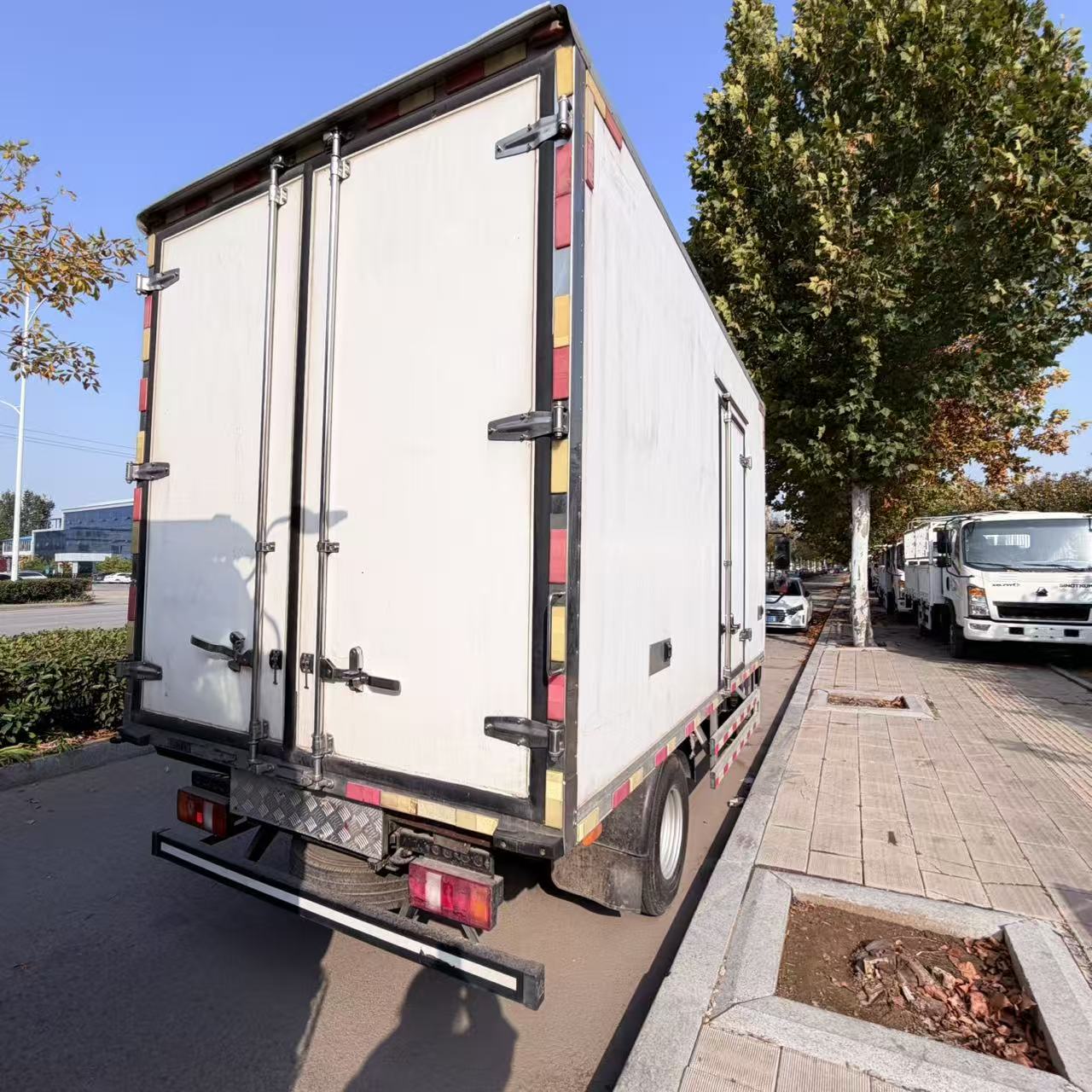
Proper cargo stacking for refrigerated van and insulated box truck is critical to maintain stable temperature, protect cold chain goods and reduce refrigeration unit failure during cross-border delivery.
- Keep air gaps between cargo and box walls, ceiling. Do not load goods tight against panels to ensure good cold air circulation inside reefer box.
- Leave bottom air channels under pallets. Never seal pallet base directly on floor, so cooling air can flow underneath to prevent bottom cargo warming.
- Stack height shall not exceed the air outlet of refrigeration unit. Blocked air outlet causes poor cooling and frequent compressor cycling.
- Separate cargo with different set temperatures. Do not mix warm goods and frozen cargo together to avoid temperature cross-contamination.
- Reserve horizontal air channels between stacks. Dense packing without gaps easily creates hot spots and spoilage of frozen or fresh produce.
- Keep packages away from condensate drain area, take moisture-proof measures to avoid package damage from condensate water.
- Place heavy cargo at bottom and light goods on top, keep center of gravity centered, avoid unbalanced load for driving safety.
- Never block the return air inlet of reefer unit. Blocked return air will trigger fault alarm and shorten service life of refrigeration equipment.
- Isolate temperature-sensitive cargo such as vaccines, fruits and vegetables. Extra ventilation space is required for precise temperature control.
- Double-check all air channels after loading. Make sure no cargo collapse or blockage before pre-cooling the reefer van.