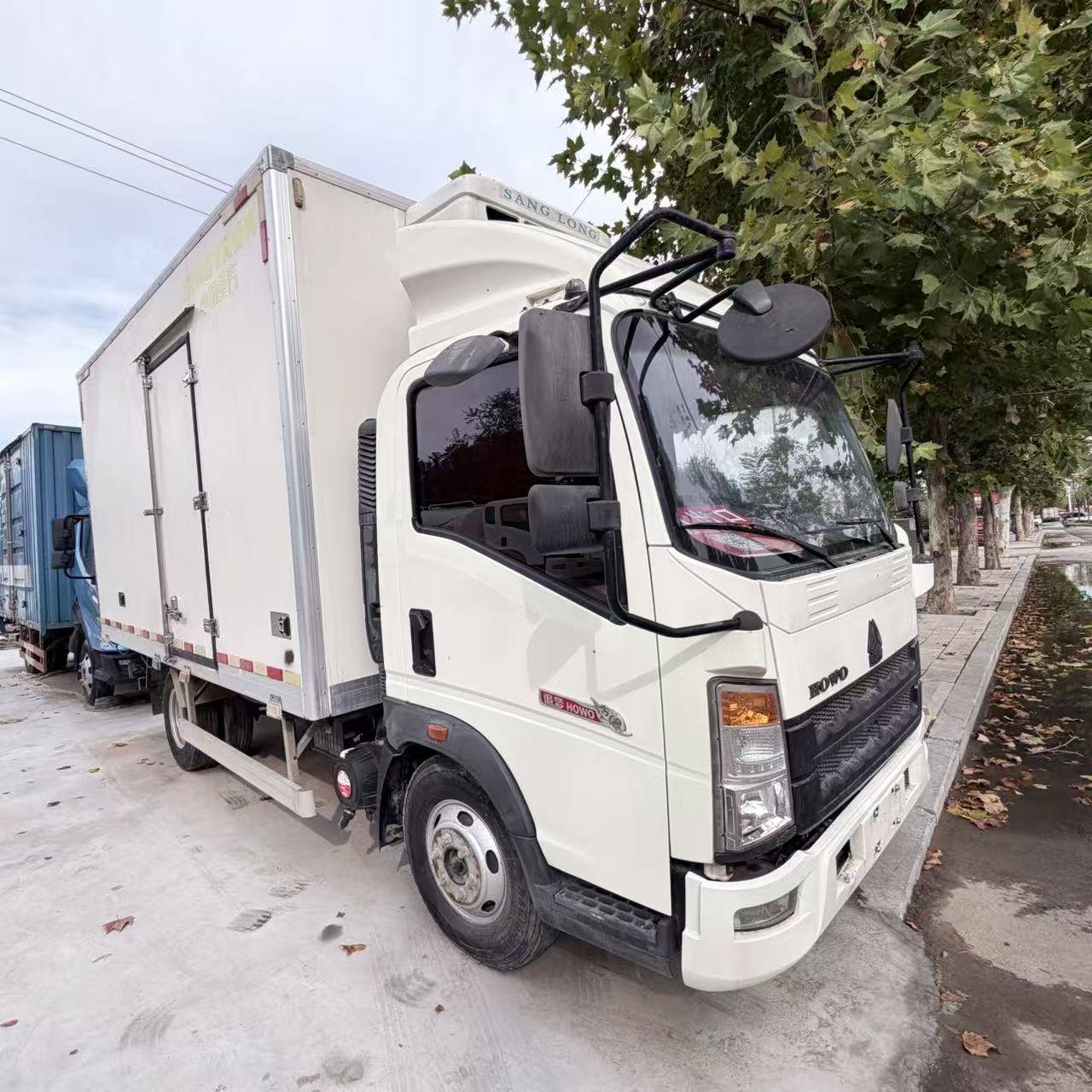
Insulated box and reefer van refrigerated semi trailer often suffer box panel delamination, blistering and peeling after long service life. Common causes include water ingress, aged sealant, temperature cycling and impact damage. Delamination weakens thermal insulation, causes cold air leakage, frequent refrigeration unit cycling and higher fuel consumption. Severe delamination leads to panel deformation and unstable cold chain temperature. This guide is for overseas cold chain fleets and reefer repair workshops.https://www.hjtrailer.com/truck/box-truck/howo-4-2m-refrigerated-truck.html
- Mark all delaminated and blistered areas, grind the damaged surface, remove old sealant, cracked coating and wet foam residue, locate the water leakage source first.
- Seal all water entry paths including seams, rivet holes, scratches and door frame gaps to stop moisture from penetrating foam core again.
- For small minor blisters: drill small drain holes to release trapped water, inject special panel adhesive, apply clamping pressure, seal holes and repaint after full curing.
- For large delamination with saturated failed foam core: cut out damaged section, replace foam core and inner/outer skin with matching thickness and specification.
- Use low-temperature resistant polyurethane sealant on panel joints. Ordinary silicone is not suitable for repeated hot and cold cycling inside reefer box.
- Check surface flatness after repair, smooth joint transition to avoid standing water that triggers repeated delamination.
- Carry out air leakage test after repair to check air infiltration, air leak is one of the top reasons for recurring reefer panel blistering.
- Preventive maintenance: inspect panel seams, rivets and door seals regularly, avoid sharp cargo scratching outer skin.
- Do not simply cover blisters with putty without draining trapped water. Delamination will reappear quickly.
- Perform repair work in dry conditions. Moisture on bonding surface reduces adhesive strength and shortens repair lifespan.