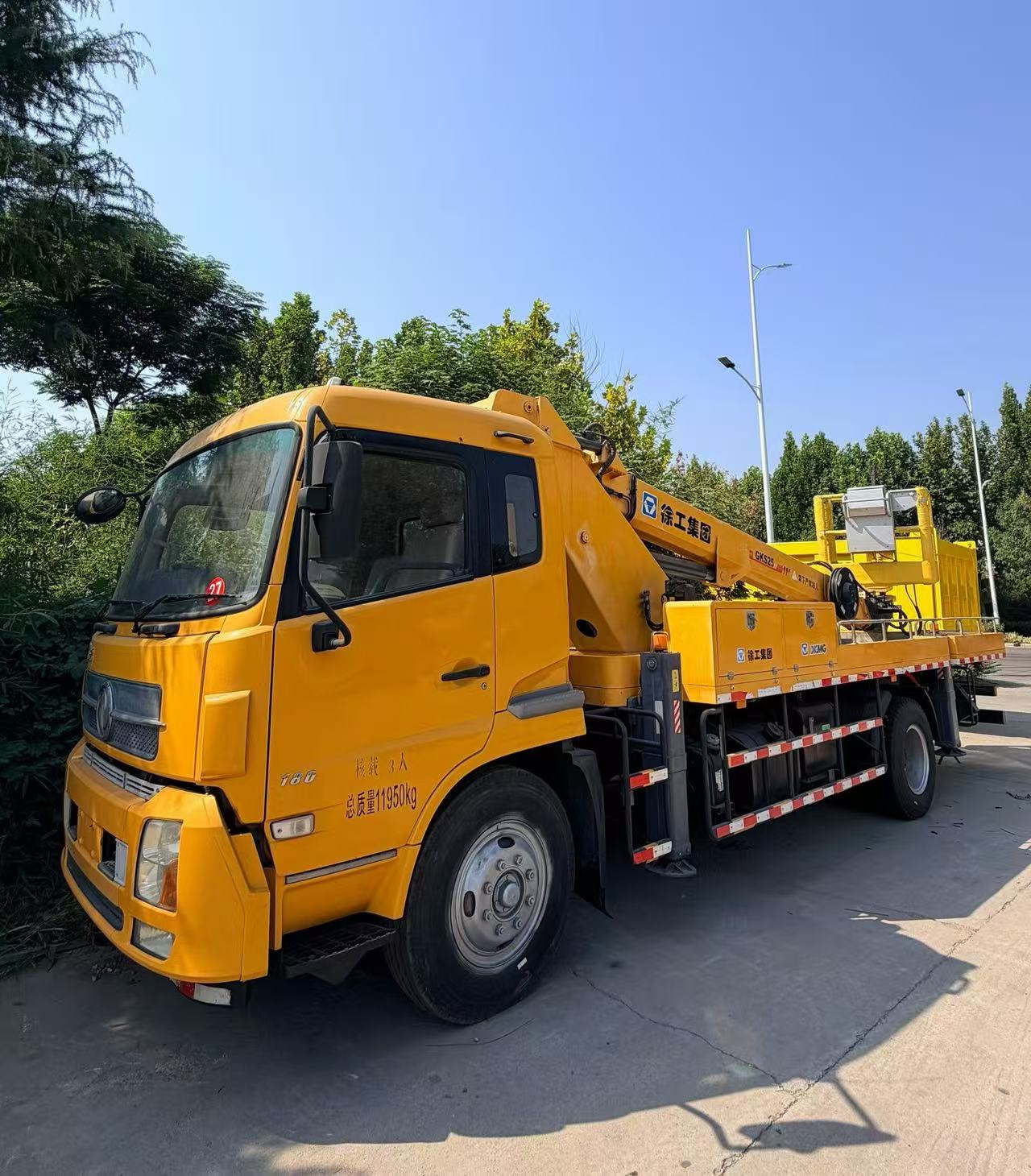
The emergency lowering system is a vital safety component for truck-mounted aerial work platforms. Many new operators and site maintenance staff lack clear understanding of its trigger conditions and operation steps. Mastering emergency lowering operation helps bring the basket and workers back to the ground safely when facing sudden failures such as power loss, hydraulic pressure drop or main control system breakdown. It is a core part of safety training for straight boom aerial lift trucks.https://www.hjtrailer.com/construction-machinery/truck-mounted-crane/telescopic-boom-aerial-lift.html
Different from normal electric lifting control, the emergency lowering unit is driven by an independent manual hydraulic circuit or backup power source. It is not designed for regular lifting work, only for emergency rescue scenarios. When the engine stalls, main hydraulic pump fails or electric control breaks down, operators can activate emergency lowering from the basket or chassis position to retract the boom slowly. The descending speed must be controlled strictly; rapid boom retraction is forbidden to avoid shock and secondary hazards.
You should inspect emergency lowering parts before every shift: check the emergency handle, control valve and backup oil pipes for oil leakage and aging, and make sure operation labels are clear. It is recommended to practice emergency descent under safe conditions during regular lifting tests, so operators will not make wrong operations during real accidents. Please note that emergency lowering is only a backup safety measure, frequent use will speed up the wear of hydraulic seals.
For XCMG straight boom aerial lifts exported to Africa, we test the emergency lowering function one by one during factory inspection to guarantee smooth descent and reliable locking devices. Construction site managers need to arrange regular safety drills for drivers and platform operators to standardize high-altitude work, reduce safety risks for street light maintenance, building exterior renovation and sign installation projects.