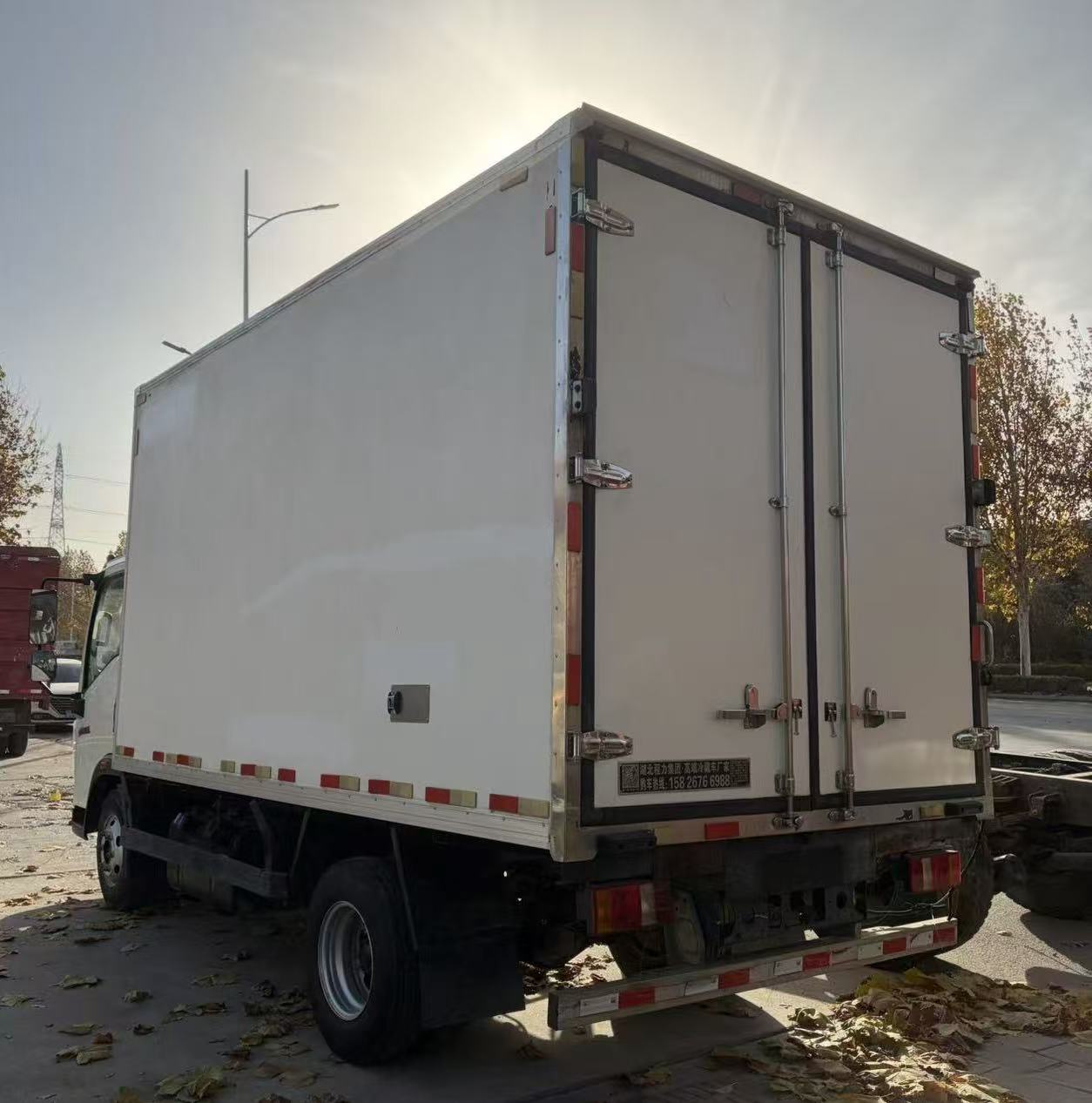
Choosing a suitable refrigerated box truck is the key to stable, loss-free cold chain logistics in cross-border transportation. Different countries have different road conditions, tropical high-temperature climates, traffic regulations, cargo types and inspection standards, which means ordinary light-duty trucks cannot meet international cold chain shipping requirements. Many overseas buyers struggle with selecting the right refrigerated truck configuration for long-haul cross-border delivery, fresh food transportation, frozen cargo logistics and medical temperature-sensitive goods shipping.
When purchasing a refrigerated box truck for cross-border transport, the first core factor is the insulation performance of the refrigerated cargo box. Cross-border shipments usually involve long-distance driving, high-temperature tropical environments and long-time parking during customs clearance. A qualified cross-border refrigerated truck must adopt integral polyurethane foam insulation technology and fully sealed box structure. Seamless box design effectively avoids cold bridge leakage, prevents hot air penetration, reduces condensation and ensures stable internal temperature during multi-day cross-border transportation. High-quality food-grade inner panel material is also essential for exporting fruit, vegetables, meat, seafood and dairy products, complying with international food safety transportation standards.
Secondly, buyers need to select a matching refrigeration unit according to cargo types and ambient temperature. Roof-mounted refrigeration units are the most popular option for cross-border light-duty refrigerated box trucks due to their stable cooling speed, strong low-temperature resistance and low failure rate in hot climates. For fresh fruit and vegetable preservation transportation, users can choose constant-temperature fresh-keeping mode. For frozen meat, seafood and frozen food wholesale delivery, deep freezing configuration is required. For pharmaceutical cold chain cargo, precise temperature control refrigeration equipment is necessary to avoid temperature fluctuation during border crossing and road transit.
Thirdly, LHD and RHD configuration compliance is an indispensable selection point for cross-border trucks. Different countries and regions have strict traffic rules for left-hand drive and right-hand drive vehicles. Professional refrigerated truck manufacturers provide full customization of LHD and RHD versions to adapt to Southeast Asia, Africa and other overseas markets, ensuring the vehicles can be legally registered and operated locally.
In addition, chassis performance directly determines cross-border driving stability. Cross-border transportation includes complex road conditions such as mountain roads, bumpy rural roads and long highway driving. A reliable 4×2 light-duty truck chassis with fuel-saving diesel power, stable climbing performance and durable mechanical structure can effectively reduce breakdown risks and lower long-term fleet operation and maintenance costs.
Practical customized functions also improve cross-border cold chain efficiency. Optional configurations such as hydraulic tail lift, real-time temperature recorder, internal air circulation system, side door and anti-slip fixing devices greatly facilitate cargo loading, temperature monitoring and long-distance cold chain management. Professional manufacturers conduct strict cooling tests, water-proof sealing tests and road tests before shipment to guarantee every refrigerated box truck adapts to complex cross-border logistics scenarios.
In conclusion, when choosing a refrigerated box truck for cross-border transport, buyers should comprehensively consider box insulation quality, refrigeration unit performance, driving mode compliance, chassis stability and customized functions. A professional customized cross-border cold chain truck can effectively reduce cargo damage, improve delivery efficiency and create stable profits for overseas logistics companies, food factories and agricultural product distributors.