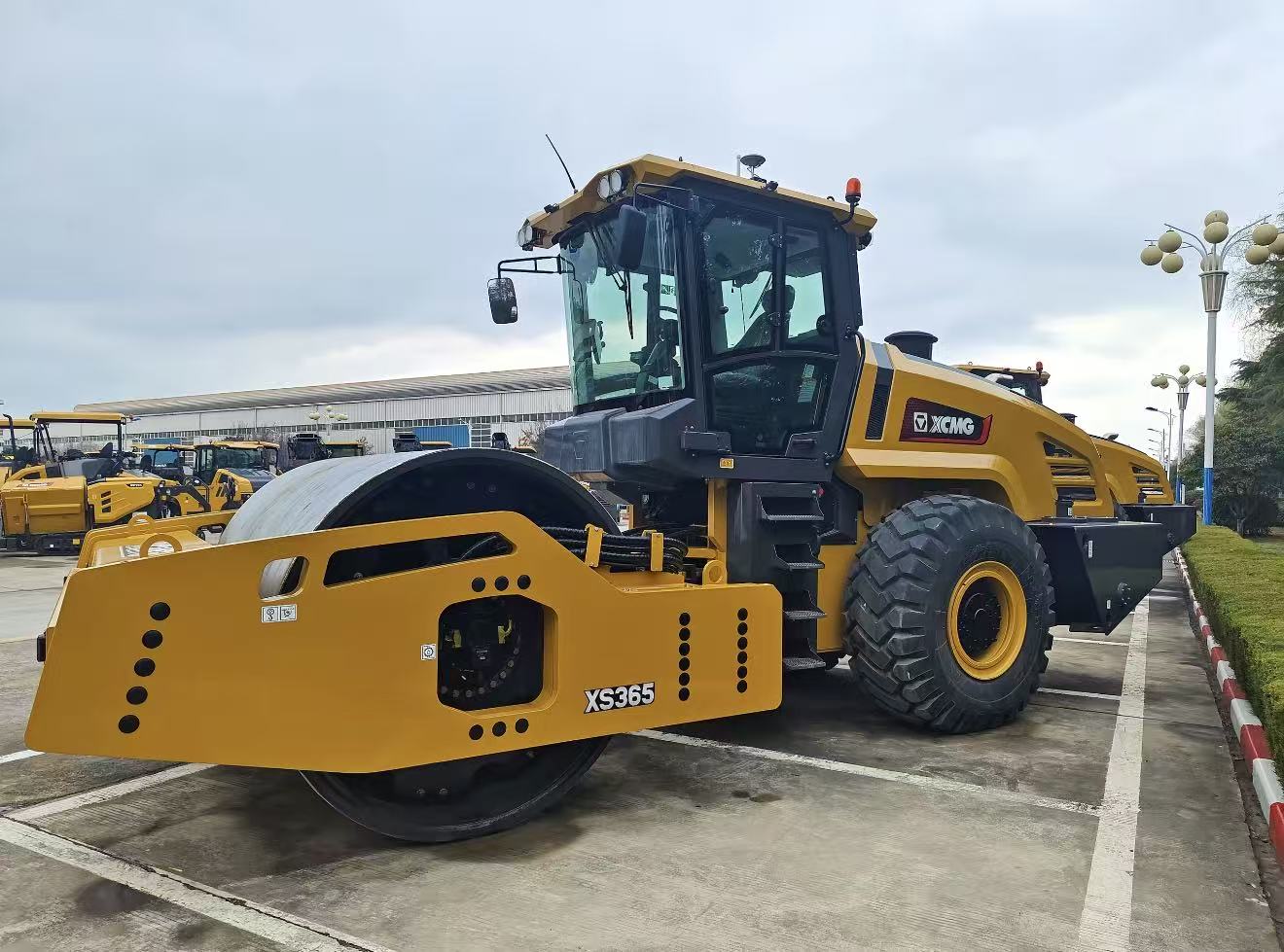
Vibratory Roller Daily Maintenance Tips. Many road and bridge contractors, earthwork companies, equipment rental owners and operators in Southeast Asia and Africa overlook routine inspection for single drum and double drum vibratory rollers during subgrade compaction and road paving work. Poor daily care often causes weak vibration, hydraulic failure, engine damage and early shock absorber breakdown, leading to costly project delays. This guide covers road construction, dam backfilling and site grading work. It lists daily check items for vibratory rollers, helping overseas construction teams cut repair cost and extend roller service life.
Vibratory rollers work continuously in dusty, bumpy and heavy-load conditions. Vibration motors, hydraulic lines, shock isolation system, drum and engine are high-failure parts. Pre-shift and post-shift daily maintenance greatly reduces unexpected breakdowns and improves machine uptime.
Pre-shift Inspection Before Starting Work
- Check engine oil level and coolant level, confirm no leakage; check fuel volume to avoid sudden shutdown during compaction.
- Check hydraulic oil level and oil condition. Inspect pipe joints and vibration motors for oil seepage or leaks.
Inspect the drum: check for cracks and deformation, clean stuck mud and crushed stone. Test water spray nozzles for asphalt compaction models.
- Check rubber shock mounts: these are critical vibration parts. Watch for cracks or detachment. Failed shock mounts cause strange noise and lost vibration force.
- Check rubber tires or travel motors for hub oil leakage and track deviation.
- Test dashboard indicators, warning lights, headlights, horn and reverse alarm to ensure all safety devices work.
- Test vibration function: switch between high amplitude and low amplitude modes, confirm stable vibration without abnormal noise.
Post-shift Maintenance After Work
- Clean the whole machine: remove mud and dust on drum and radiator fins. Dust buildup easily triggers engine overheating.
- Check fasteners: tighten loose bolts on drum and frame. Heavy vibration on stony sites loosens bolts frequently.
- Blow dust off air filter elements. Clean the filter every day on dusty sites to avoid engine wear.
- Proper parking: park on firm flat ground instead of slopes. Use supports under the drum to avoid permanent deformation of rubber shock pads.
- Log machine conditions: record abnormal noise, oil leaks and vibration issues. Arrange repair promptly instead of running with faults.
Key Maintenance to Prevent Common Failures
- Hydraulic system: Keep hydraulic oil clean from dust and water leakage. Fix oil leaks immediately to protect vibration motors.
- Vibration bearings and motors: Avoid long-time no-load vibration, which accelerates bearing wear.
- Water sprinkler system: Clear blocked nozzles daily to prevent asphalt sticking on the drum during road paving.
- Battery: Clean battery terminals to prevent oxidation. Hot tropical climates shorten battery service life.
Extra Tips for Overseas Operators
Spare parts including seal kits, shock pads, hydraulic filters, spray nozzles and vibration motors are consumables and should be stocked on site. For rainy tropical zones, focus on rust prevention and waterproof electrical connectors. Oil bath air filters are recommended for dusty mining yards. Many construction fleets manage excavators, dump trucks and vibratory rollers together with unified maintenance schedules to keep road and dam projects on track.