

If you’ve ever been stuck on the side of the road after a breakdown, a fender bender, or a heavy equipment mishap, you’ve likely relied on the quiet expertise of a tow truck—more formally, a vehicle recovery operation. As someone who supplies specialized tow trucks, I’ve spent years witnessing how these vehicles do far more than just drag a broken car to a shop. They’re the backbone of clearing chaos, protecting roadsides, and getting people, cargo, and machinery back on track safely. Let’s break down the real, often underrated, role of a tow truck in recovery operations, from the daily grind of city streets to the extreme work of construction sites and highways.
First, think about the most common scenario: a passenger car that conks out on a busy urban highway at rush hour. A driver might panic, but a tow truck operator showing up is the first line of defense. The immediate job here isn’t just hooking up a car—it’s preventing secondary crashes. A disabled vehicle sitting in a traffic lane is a major hazard; studies from the National Highway Traffic Safety Administration (NHTSA) link around 2,000 secondary collisions a year to broken-down or improperly moved cars on highways. Tow trucks are designed to remove that hazard quickly, but not all tow trucks are built for every job. For light passenger vehicle recovery, a standard integrated tow truck (often called a “hook and chain” or “wheel-lift” truck) works for most, but when roads are clogged and space is tight, specialized options like a Road Clearance Vehicle become critical. These trucks are built for fast, maneuverable response in dense urban areas, with compact turning radii and under-lifting systems that let operators secure a disabled car without taking up extra road space. That speed isn’t just convenient—it’s life-saving.

But recovery operations expand far beyond broken-down passenger cars. Take highway accidents, where one crash can pile up dozens of vehicles in minutes. Here, a single tow truck might not be enough, but multifunctional designs make a huge difference. Many modern recovery needs combine towing, winching, and even basic on-site repairs, and that’s where a Multifunctional Rescue Truck shines. Unlike older tow trucks that only had a winch and a hook, these vehicles come equipped with built-in first aid kits, basic tool sets for flat tires or dead batteries, and heavy-duty winches capable of pulling a car out of a ditch or a semi-truck’s trailer loose from an underpass. I’ve seen these trucks be the difference between a 2-hour road closure and a 10-minute one after a small accident, because they can handle multiple tasks in one trip instead of waiting for three separate vehicles to show up. For operators on tight timelines—especially on interstates where delays cost trucking companies thousands of dollars an hour—this efficiency is non-negotiable.
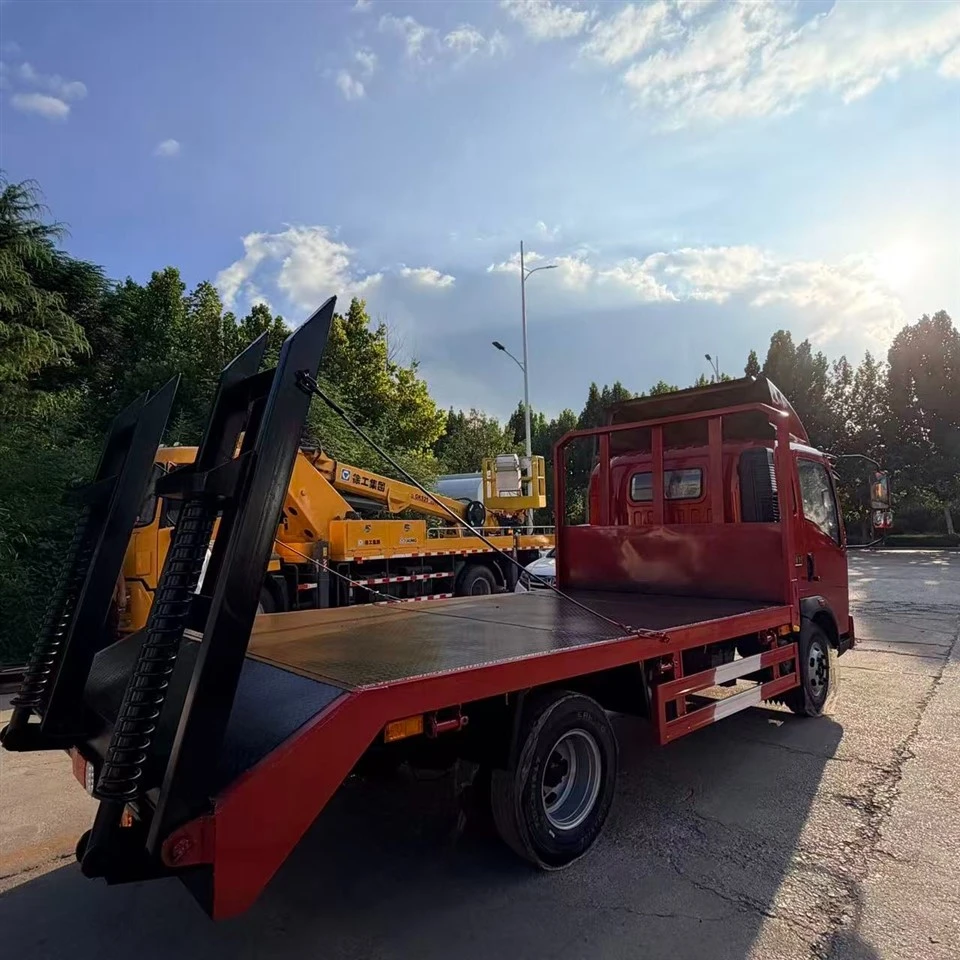
Another often overlooked role of tow trucks is handling cargo recovery after an accident. A loaded semi-truck that rolls over on a highway doesn’t just need its cab towed; it needs its cargo stabilized and moved, too. For example, a truck carrying construction materials might spill gravel or concrete across multiple lanes, blocking traffic for hours. In these cases, a standard tow truck can’t handle the full load, but a Multifunctional Tow Truck with heavy-duty towing capacity can secure both the cab and the remains of the cargo trailer, while also pulling lightweight debris off the road. But when the job is moving large construction machinery—like a backhoe, an excavator, or a generator—standard tow trucks fall short entirely. That’s where specialized flatbed solutions come in. A Flatbed Truck For Construction Machinery Transport has a low, wide flat deck that can support the weight of heavy equipment, with hydraulic ramps that let operators drive machinery onto the truck without needing a separate crane. This is a critical part of recovery for construction sites where a broken excavator or a damaged bulldozer can bring a whole project to a halt.
Beyond immediate response, tow trucks play a key role in long-term recovery and road maintenance. Once an accident is cleared, tow trucks help move damaged vehicles to impound lots, repair shops, or salvage yards, reducing the burden on local authorities. In some cases, they also assist with municipal road repairs—pulling up old guardrails that have been damaged, moving temporary construction barriers, or even clearing snow from side roads in winter. I worked with a municipal department in the Midwest last year that relied on a mix of our road clearance vehicles and multifunctional tow trucks to handle both winter snow removal and accident recovery during a brutal ice storm. They told me that without those specialized trucks, road closures would have tripled, leaving hundreds of drivers stranded overnight.
Of course, it’s not just about the trucks themselves—it’s about how they’re used in recovery operations. The best tow truck operators aren’t just drivers; they’re trained technicians who know how to secure a vehicle without causing more damage, how to navigate tight spaces, and how to work safely around moving traffic. That’s why investing in the right tow truck for a job is just as important as investing in operator training. For example, trying to use a standard light-duty tow truck to move a 40-ton semi-truck is not only inefficient—it’s dangerous. It can lead to the vehicle tipping over, causing another accident, or damaging the road surface. That’s why specialized trucks like the ones we supply are designed with load-specific capacities, advanced safety features, and durable materials to handle tough conditions.
As someone in the tow truck supply business, I’ve also seen how technology has changed the role of these vehicles in recent years. Many modern tow trucks come with GPS tracking, remote winch controls, and even cameras that let operators secure a vehicle without stepping into traffic. That has made recovery operations faster and safer, reducing the risk of injury for operators. It also helps with logistics—fleet managers can track where their trucks are in real time, dispatch the closest truck to an accident, and ensure that the right type of truck is sent for the job. For example, if an accident on a rural highway involves a tractor-trailer, a manager can quickly send a multifunctional tow truck with heavy-duty winching capacity, instead of a light-duty urban road clearance vehicle that wouldn’t be able to handle the load.
Looking ahead, the role of tow trucks in recovery operations is only going to grow. As more electric vehicles hit the road, tow trucks will need to adapt—they’ll need to have insulated tools to handle high-voltage batteries, and specialized towing systems that don’t damage EV frames. Meanwhile, as construction projects expand, the demand for heavy-duty flatbed recovery trucks will keep rising. The core job, though, will stay the same: to get people moving, clear hazards, and keep roads safe.
If you’re looking to upgrade your recovery fleet or add specialized tow trucks to your operations, we have a range of solutions tailored to different needs, from urban road clearance to heavy construction machinery transport. Contact our team today to discuss how we can help you improve your recovery efficiency and safety.
References:
National Highway Traffic Safety Administration. (2022). Secondary Collision Trends on U.S. Highways.
International Recovery and Safety Association. (2023). Best Practices for Tow Truck Operations in Urban and Rural Settings.
Construction Equipment Association. (2022). Specialized Transport Solutions for Heavy Construction Machinery.