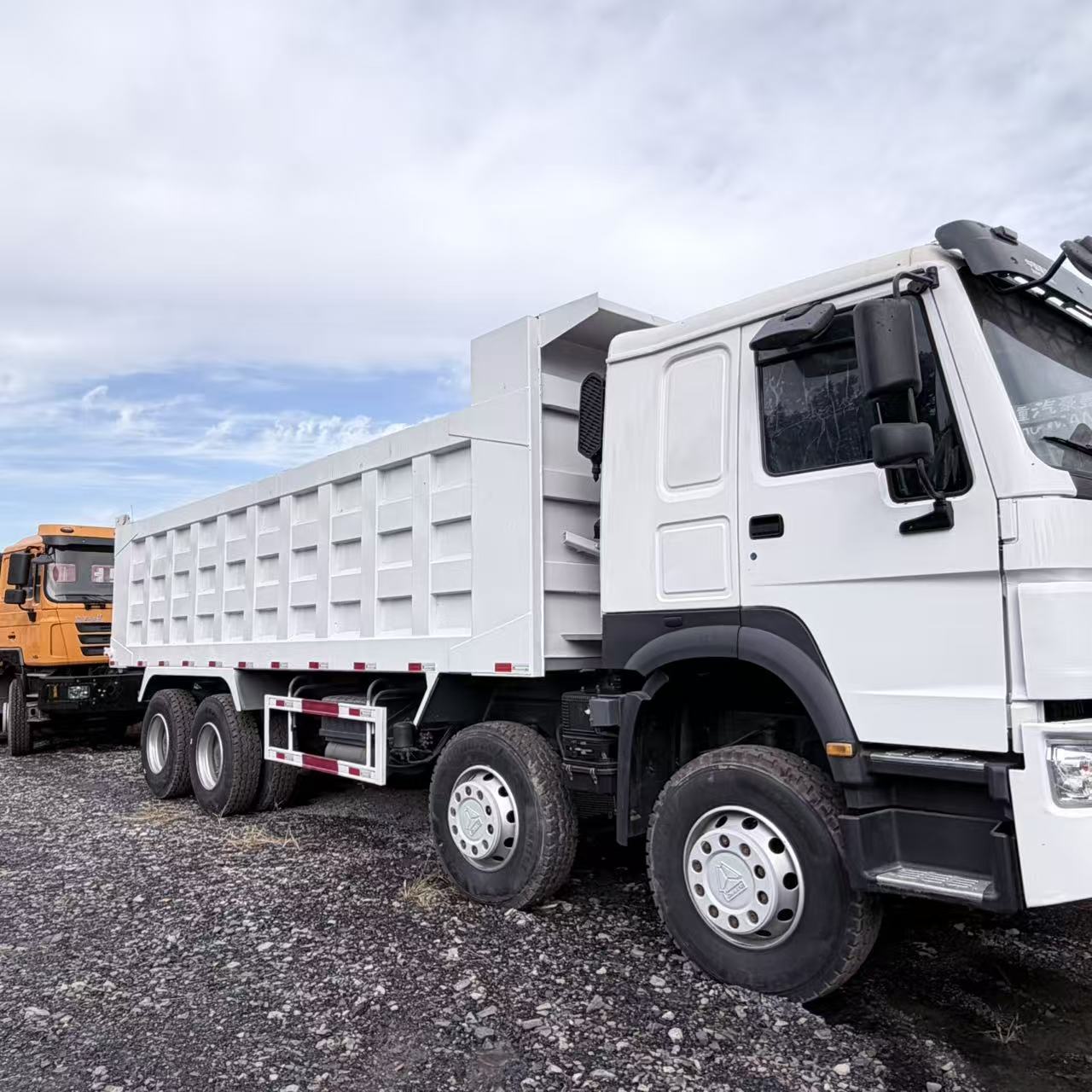
Many overseas buyers focus only on horsepower when selecting construction trucks, such as dump trucks, truck mounted cranes, flatbed wreckers and sanitation engineering vehicles. However, proper engine power matching depends on a combination of gross vehicle weight, working terrain, load cycle, PTO demand, torque curve and supporting transmission and rear axle ratio. Horsepower decides the top speed, while torque determines climbing performance and low-speed pulling capacity for construction conditions.https://www.hjtrailer.com/truck/dump-truck/white-mining-construction-dump-truck.html
First, confirm the vehicle type and main working duty. Light-duty construction trucks, including light tilt tray wrecker, small truck mounted crane and mini water tanker, usually adopt 130–200 HP engines. They run mostly on urban roads, with frequent start-stop and light load. Stable low-speed torque is more important than high horsepower. This power range is widely used on HOWO light chassis and Isuzu light chassis, and RHD versions are very popular for urban roadside rescue and municipal jobs.
Medium-duty construction trucks cover medium dump trucks, medium truck mounted cranes, sewage suction trucks and medium flatbed recovery trucks. The recommended engine power is 180–280 HP. These vehicles often shuttle between cities and construction sites, carrying medium cargo and needing continuous power output for PTO hydraulic systems. If you equip a 5–12 ton straight boom crane, the engine must reserve enough power for the hydraulic pump while driving.
Heavy-duty construction trucks, such as 6x4 / 8x4 mining dump trucks, large tonnage truck mounted cranes and heavy integrated wreckers, generally choose 330 HP to 460 HP or higher. Mining sites, mountain roads and long steep slopes require strong climbing torque. SHACMAN and SINOTRUK HOWO heavy chassis commonly use Weichai engines in this power segment. For continuous 24-hour mining operation, buyers need to leave extra power margin to avoid overheating and power derating.
Terrain and environment are critical factors for power matching. Flat pavement can use standard power configuration. Mountainous areas, steep slopes and muddy off-road conditions need higher torque and properly increased horsepower. High altitude and tropical high-temperature areas will cause natural engine power loss, so it is wise to upgrade one power level to guarantee stable output.
PTO requirement is a special point for modified construction special trucks. Truck mounted cranes, sewage suction trucks and vacuum tankers rely on PTO to drive hydraulic pumps. If the engine only has high peak horsepower but weak low-speed torque, the hydraulic system will work unstably during lifting or suction. When matching the engine, we need to check the torque at 1200–1600 rpm, which is the common working speed range of PTO.
Avoid two common mistakes: over-spec or under-spec engine. Underpowered construction trucks will struggle on slopes, overheat easily and accelerate wear. Excessively high horsepower increases purchase cost, fuel consumption and spare parts expense, which reduces the fleet's return on investment. Engine power, gearbox gear range and rear axle ratio must be matched as a whole powertrain set.
Before ordering, our sales and technical team will confirm your local road limit, main load, slope condition, daily working hours and whether you need PTO function. We provide matched engine options for HOWO, SHACMAN, Sitrak and other engineering chassis, with optional RHD and different emission standards.
If you are looking for reasonable powertrain configuration for your construction truck, dump truck, truck mounted crane or wrecker truck, welcome to send us your working condition details for professional engine matching advice.