

Hey everyone, if you’ve ever been part of the trucking game—whether you’re an owner-operator just starting out, a fleet manager looking to expand, or someone curious about how big rigs hit the road—you know there’s way more to driving a tractor truck than turning the key and stepping on the gas. I’m Jake, I run a tractor truck supply business, and I’ve spent the last 10 years walking new drivers and operators through the fine print of what’s actually legal behind the wheel of these heavy-duty beasts. Most folks assume it’s just a regular driver’s license plus a big rig—nope, there’s a whole stack of federal and state rules you can’t skip, and getting it wrong can cost you big (like, thousands in fines, or even losing your ability to haul loads). Today, I’m breaking down the real, no-BS legal requirements for driving a tractor truck, plus some tips on picking the right rig if you’re in the market.
First up, the big one: your commercial driver’s license (CDL). This isn’t a regular Class C license you use for a pickup with a trailer. The FMCSA (Federal Motor Carrier Safety Administration) and state DMVs split CDLs into classes, and for tractor trucks—those semi rigs that pull trailers—you need at least a Class A CDL. Wait, let me make that clear: a Class A license is the only one that lets you operate a combination of vehicles with a gross combination weight rating (GCWR) of 26,001 pounds or more, as long as the towed unit is over 10,000 pounds. That’s exactly what a tractor truck does. If you try to drive one with a Class B or C, you’re basically driving without a license, full stop. But it’s not just the class—you have to pass three core tests: a written general knowledge test, an air brakes test (super important because most heavy tractors use air brakes, not hydraulic), and a combination vehicles test. Some states also require a pre-trip inspection test, where you have to walk your rig and point out every working part (lights, tires, brakes, mirrors) to a tester. And for those who want to pull specific loads like hazardous materials or double/triple trailers, you add endorsements—like H for HazMat or N for tank vehicles. Important side note: your CDL has to be from the state where you live. You can’t get it in a random state and drive across the country with it; that’s a common newbie mistake that gets you flagged at weigh stations.

Next, medical certification. This is non-negotiable, and it’s not just a doctor’s note that says you’re “okay to drive.” The FMCSA requires every CDL holder to have a Medical Examiner’s Certificate (MEC) from a doctor who’s listed on the National Registry of Certified Medical Examiners. The doctor checks your vision (at least 20/40 in each eye, with or without glasses), hearing (able to hear a whispered voice from 5 feet away), blood pressure (under 140/90 is ideal; higher than that and you might be restricted), and any conditions that could make driving dangerous—like epilepsy or uncontrolled diabetes. If you have that MEC, you have to keep a copy in your truck at all times. It expires every 2 years for most people, every 1 year for anyone with higher blood pressure or other chronic conditions. Skipping this? FMCSA pulls can you over, fine you, and even suspend your CDL. I’ve seen it happen to guys who thought a quick doctor’s visit with their regular GP was enough—nope, only those registered on the national list count.
Then there’s the truck itself. A tractor truck isn’t just something you buy and hit the road; it has to meet federal and state safety standards, and that starts with registration and licensing. First, you have to register the truck with your state’s Department of Motor Vehicles, and get a commercial vehicle registration (not a passenger vehicle one). Most states also require you to get a USDOT number, which is a unique 10-digit number from the FMCSA that tracks your truck’s safety records, inspections, and compliance. If you’re operating across state lines, you also need a Motor Carrier (MC) number, which lets you haul cargo for other businesses (if you’re only hauling your own loads, you might not need it, but it’s worth getting just in case). Beyond numbers, your rig has to pass annual (or sometimes biennial) inspections, called Annual Vehicle Inspections (AVIs) or DOT inspections. These check everything from brakes and tires to lighting, steering, and even the cab’s structural integrity. If your truck doesn’t pass, you can’t drive it—no exceptions. I’ve had customers come to me with used tractors that needed new brake lines just to pass, so always factor that in when buying.
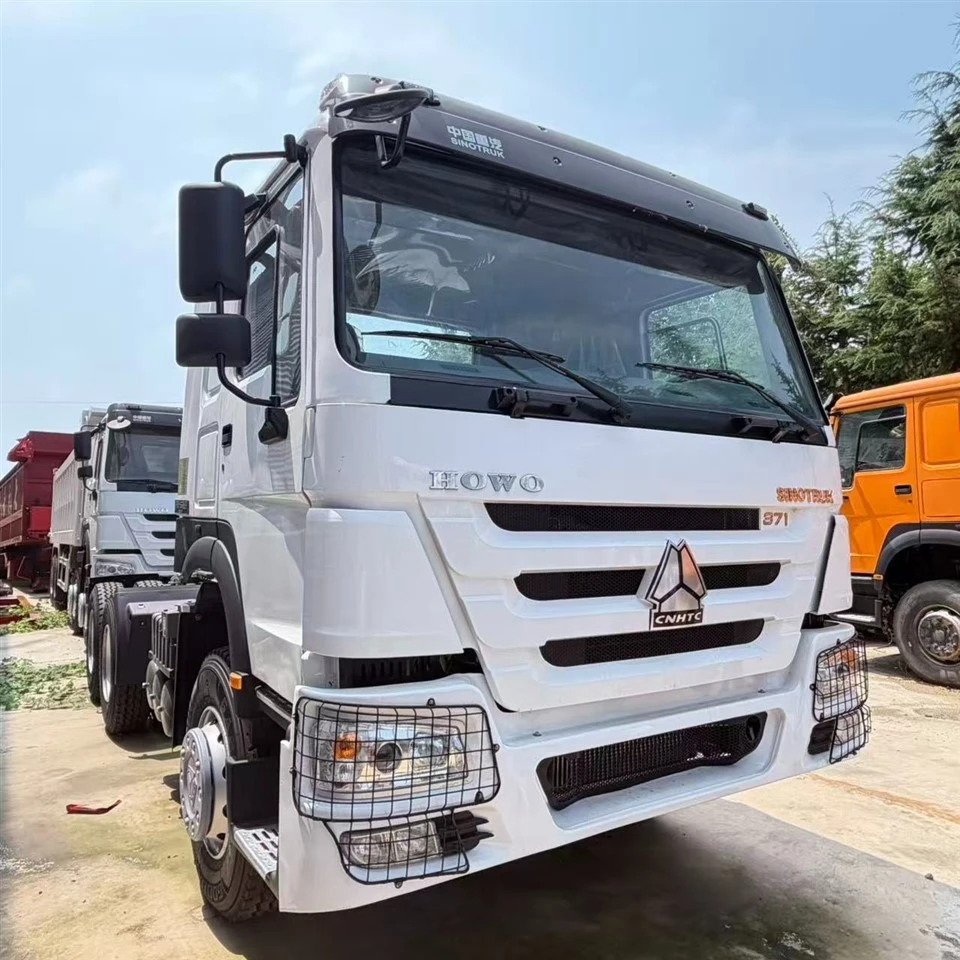
Wait, and if you’re buying a new tractor truck, not a used one, make sure it’s built to meet current standards. For example, many of our models here are heavy-duty, like the HOWO Heavy‑Duty Tractor Truck, which is built with updated air brake systems and lighting that meets FMCSA specs right out of the factory. That’s one less headache for you when it comes time to register. If you’re more into specific configurations, like a 6x4 setup (which is super popular for heavy loads), the HOWO 6x4 Tractor Head is a great pick—its axle setup is designed to handle cross-country hauls without violating weight limits, which I’ll talk about next. Oh, and if you need something tailored for specific cargo, like a flatbed for construction gear or a van for freight, the Semi-trailer Tractor link shows how our tractors pair with different trailers—just make sure the whole combo meets weight rules.
Speaking of weight limits, that’s another legal box to check. FMCSA sets federal weight limits for tractor trucks to protect roads and bridges, and states can add their own but can’t go lower than the federal minimum. The maximum gross vehicle weight (GVW) for a single tractor is 20,000 pounds, but when you add a trailer, the GCWR max is 80,000 pounds (including the truck, trailer, cargo, and fuel). But here’s the thing: you can’t just load up to 80k anywhere. Each state has “bridge formula” weights, which mean you can’t put too much weight on any single axle (like 12,000 pounds for a single front axle, 34,000 for a tandem rear axle). If you’re caught overloading, it’s a huge fine—some states charge per pound over the limit, and it adds up fast. For example, if you’re 1,000 pounds over in Texas, that’s like $200; in California, it’s way higher, like $500 per thousand. That’s why picking the right tractor is key—our Sinotruk Howo 6×4 Tractor Truck is engineered with heavy-duty axles that distribute weight evenly, so you stay under legal limits no matter what load you’re hauling. We also have the White HOWO Tractor Head, which is a fan favorite for owner-operators because it’s reliable and fits all standard weight requirements, so you don’t have to worry about custom modifications that could mess with your legal weight.
Then there’s driver logbooks and hours of service (HOS) rules. The FMCSA’s HOS rules are designed to prevent fatigued driving, which is a huge safety issue—and a big legal one. For non-passenger property-carrying drivers (that’s most tractor truck operators), you can drive up to 11 hours after 10 consecutive hours off duty. You have to stop driving after 14 straight hours on duty, and you can’t drive after your 60/70-hour limit (60 hours in 7 days, or 70 in 8 days, depending on if you reset weekly). And you have to keep a logbook (or an electronic logging device, ELD—no more paper logbooks for most drivers, thanks to the ELD mandate) that tracks your driving time, on-duty time, and off-duty time. If you forget to log, or falsify your log, that’s a major violation, and it can result in fines, points on your CDL, or even being placed out of service. I always tell new drivers to use a good ELD—they sync with your truck’s engine and automatically track driving time, so you don’t have to stress about manual entries.
Wait, what about hazmat? If you’re hauling hazardous materials—anything from gas to chemicals—you need extra legal stuff. First, you need a hazmat endorsement on your CDL, which requires a background check (FBI fingerprinting) and a knowledge test. Then, your truck has to be marked with hazmat placards, and you have to follow specific routing rules (no driving through residential areas, no parking near schools or hospitals). Some states even require additional permits for hazmat hauls, so it’s not just a federal rule. If you’re just starting out and not hauling hazmat right away, that’s something to keep in mind for when you expand.
Let me be real with you: most guys I talk to get tripped up on two things. One, skipping the medical certification (they think they “feel fine” so they don’t bother with the registered doctor). Two, not checking state-specific rules for cross-state hauls. For example, if you’re driving through New York, their length limits for tractor and trailer are a bit different than Florida’s, so you have to adjust. That’s why having a rig that’s built to meet all federal standards is a big win—all our tractors, whether it’s the HOWO line or the Semi-trailer Tractor models, are FMCSA-compliant, so you don’t have to worry about passing inspections just because your rig is outdated or not built right.
Now, if you’re in the market for a new tractor truck, don’t just go for the cheapest one—make sure it checks all the legal boxes before you even drive it off the lot. Let’s say you’re an owner-operator doing local hauls: a light-duty 6x4 tractor might work, but if you’re doing cross-country heavy hauls, you need a heavy-duty model that can handle the weight. Our HOWO Heavy‑Duty Tractor Truck is built for that—its durable frame and powerful engine make it perfect for long hauls, and it’s already inspected to meet all federal safety standards, so you can register it without extra work. If you’re a small fleet looking to add a few rigs, the Sinotruk Howo 6×4 Tractor Truck is a popular pick because it balances reliability and cost, and it’s easy to maintain, which saves you money on inspections later. Even if you’re just testing the waters, the HOWO 6x4 Tractor Head is versatile—you can pair it with different trailers for different loads, so it works for local deliveries or long-haul runs.
Wait, one last thing: insurance. Yeah, insurance isn’t a “legal requirement” you hear about as much as CDLs, but it’s required by every state before you can operate a commercial tractor truck. You need liability insurance that covers at least $750,000 for most trucks (some hazmat hauls require higher, like $5 million). If you’re leasing a truck or working for a fleet, your company might cover it, but if you’re an owner-operator, you have to get your own. Skipping insurance means you can’t register your truck, so it’s a must.
Let me wrap this up. Driving a tractor truck isn’t just a job—it’s a responsibility that comes with a laundry list of legal rules to keep you, other drivers, and roads safe. From getting the right CDL and medical cert to making sure your rig is inspected and meets weight limits, every step matters. If you’re in the market for a compliant, reliable tractor truck that checks all those boxes, I can help you find exactly what you need—whether you’re a new owner-operator or an experienced fleet manager. No pressure, just honest advice. If you want to chat more about the models, check out our HOWO Heavy‑Duty Tractor Truck, HOWO 6x4 Tractor Head, Sinotruk Howo 6×4 Tractor Truck, White HOWO Tractor Head, or Semi-trailer Tractor pages on our site, or reach out to my team for a custom quote. We’ve been helping operators get on the road legally and successfully for years, and we’re here to answer all your questions.
REFERENCES
- Federal Motor Carrier Safety Administration. (2024). Commercial Driver’s License (CDL) Requirements.
- Federal Motor Carrier Safety Administration. (2024). Hours of Service (HOS) Rules for Property-Carrying Drivers.
- Federal Motor Carrier Safety Administration. (2024). Medical Examination Requirements for Commercial Drivers.
- American Association of Motor Vehicle Administrators. (2024). Commercial Vehicle Registration & Operating Rules by State.
- Federal Motor Carrier Safety Administration. (2024). Hazardous Materials Endorsement Requirements.